Our Traveler's Story: 7 Days in the Abode of Clouds
Our Traveler's Story: 7 Days in the Abode of Clouds
1. Introduction: The Vertical World of Meghalaya
*This story is shared by Priya Nair, a software engineer who traveled with Himalayan Escalate in October 2025.*
"I never thought a river could be so clear that you could see the shadows of the boats on the riverbed," Priya tells me, her eyes lighting up as she recalls the Umngot River in [Dawki](/destination/shillong-cherrapunji-dawki-tour). She isn't exaggerating. There are places in the world that look good in photos, but Meghalaya is one of the few that actually feels like a different dimension in person.
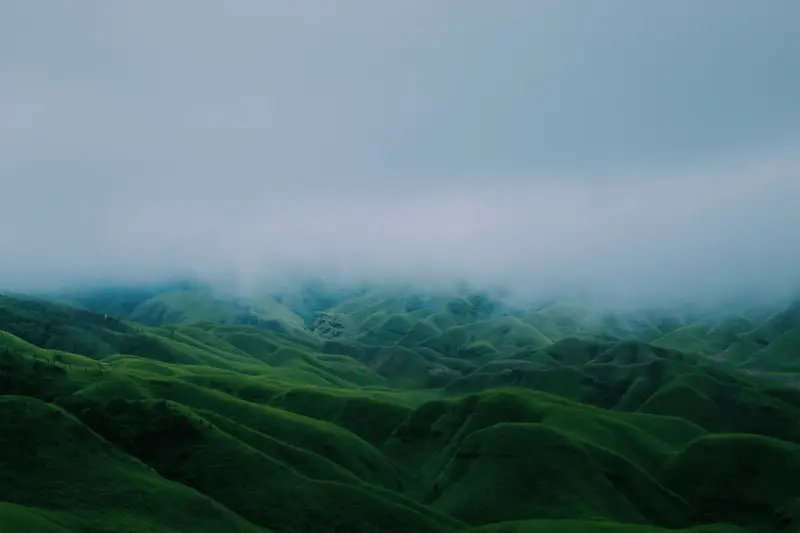
Meghalaya, literally the "Abode of Clouds," is a state defined by verticality. In 2026, it remains one of the most culturally intact and ecologically sensitive regions of India. For Priya, her 7-day journey across the East Khasi and Jaintia Hills wasn't just a vacation; it was a physical and spiritual recalibration.
As a developer in Bangalore, my life was lived in blocks of 15 minutes," she says. "But in the Khasi hills, time is measured in rainfall and the growth of roots. It changes you.
---
2. Arrival in the Scotland of the East: Shillong (Day 1)
The journey begins at the Guwahati Airport (GAU). In 2026, the transition from the humid plains of Assam to the cool, pine-scented air of the Meghalaya plateau is faster than ever, thanks to the new four-lane mountain bypass.
The First Breath of Pine
"The drive to Shillong (approx. 3.5 hours) is the first sign that you're entering a different world," Priya recalls. The highlight for her was the stop at Umiam Lake (also known as Barapani). In 2026, the lake has become a hub for eco-friendly water sports, but the true magic is standing on the ridge and watching the sun set over the vast, sapphire-blue expanse of water.
Shillong is vibrant, musical, and effortlessly cool. Priya spent her first evening in Police Bazar, the city’s heart.
---
3. The Land of Waterfalls: Cherrapunji (Days 2-3)
Leaving the city behind, Priya headed south toward Cherrapunji (locally known as Sohra). This is where the clouds come to rest.
Dancing with the Mist
"One moment you're looking at the Nohkalikai Falls—the tallest plunge waterfall in India—and the next, a wall of white mist rolls in and the entire world disappears," she describes.
---
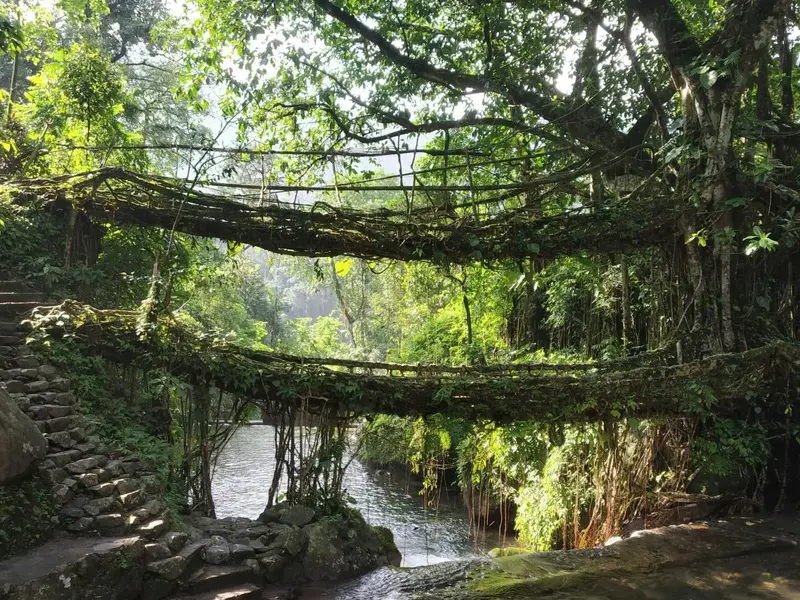
4. The Heart of the Journey: The Living Root Bridges (Day 3 Deep Dive)
This was the most intense part of Priya’s story. To see the Double Decker Living Root Bridge in Nongriat, you must descend 3,500 stone steps into the heart of the valley.
The 3,500-Step Descent
Let’s be honest," Priya laughs, "my legs were shaking by the 2,000th step. But the forest here is alive. You hear the rushing of the Umshiang River long before you see it.
The Living Root Bridges are a testament to "slow engineering." The Khasi ancestors didn't build bridges with steel or wood; they *grew* them. By guiding the roots of the *Ficus Elastica* tree across the river, they created bridges that grow stronger with age, some surviving for over 500 years.
The Rainbow Falls Quest
The next morning, she hiked further to the Rainbow Falls.
It’s named that because at exactly 10:30 AM, if the sun is out, a perfect rainbow forms in the spray of the waterfall. We reached there at 10:25. Seeing that arc of color against the white foam and the dark rocks... I cried. It was pure magic.
---
5. The Glass River: Dawki & Umngot (Day 4)
After the physical intensity of the Root Bridges, Priya’s journey took a more serene turn heading toward the International Border with Bangladesh.
The Shadow of the Boat
We reached Dawki by noon," Priya says. "The Umngot River is the kind of natural phenomenon that makes you question your vision. The water is so transparent that when you’re in a boat, it feels like you’re floating in mid-air.
---
6. The Zero-Plastic Miracle: Mawlynnong (Day 5)
A short drive brought Priya to Mawlynnong, famously known as "Asia’s Cleanest Village."
The Bamboo Dustbins
It’s not just a title," Priya explains. "The village is immaculate. Every few meters, there's a handcrafted bamboo dustbin shaped like a conical basket.
---
7. The Jaintia Hills: Jowai and the Turquoise Pools (Day 6)
Most travelers skip the Jaintia Hills, but on the recommendation of Himalayan Escalate, Priya ended her trip in Jowai.
Krang Suri: Nature’s Infinity Pool
"If I had to pick the most beautiful spot of the entire trip, it might be Krang Suri Falls," she says.
---
8. The 2026 Meghalaya Traveler’s Toolkit
Reaching and Moving (2026)
1. Air Travel: Fly into Guwahati (GAU). There are now 2026 high-speed shuttle buses to Shillong every 30 minutes.
2. Local SUV: Hire a dedicated local driver. The roads are for those who know every curve. Indie 2026 rates are ₹4,500 – ₹6,000 per day.
3. Connectivity: Download Offline Maps. Once you're in the Nongriat valley, you are off the grid.
The 7-Day 2026 Itinerary Logic
---
9. Conclusion: The Lesson of the Roots
Meghalaya taught me that the best things in life—and in travel—cannot be rushed," Priya reflects. "You have to wait for the roots to grow. You have to wait for the mist to clear. You have to wait for the rainbow.
---
Traveler’s Checklist for Meghalaya (2026)
*Write your own cloud story: 6-Day Meghalaya Abode of Clouds Expedition.*