Kashmir in 6 Days: The Perfect Itinerary from Srinagar to Gulmarg
Kashmir in 6 Days: The Perfect 2026 Itinerary
1. Introduction: The Sentiment of the Valley
There’s a specific vibration when you land in Srinagar. It’s not just the altitude or the crisp mountain air that hits you first; it’s a palpable sense of history, a weight of beauty that feels almost ancestral. As I walked out of the newly expanded Sheikh-ul-Alam International Airport’s terminal in 2026, the first thing I noticed was the light—a soft, pearlescent glow that filters through the Zabarwan range, making even the most mundane concrete look like a watercolor painting.
Kashmir is a sentiment. It has been written about by poets for centuries, and yet, every time I return, it feels like a new discovery. In 2026, the valley has moved away from the chaotic tour-group era of 2024 and settled into what I call "Slow Kashmir." It’s a time of boutique houseboat stays, digital-first logistics, and a renewed focus on preserving the delicate ecosystem of the Himalayan waters.
If you have six days, you can’t see everything. But you can feel the pulse of the valley. Here is my firsthand, 2026-vetted itinerary for those looking to experience the "Paradise on Earth" with a humble heart and a quiet mind.
---
2. Planning Your 2026 Escape
Best time to visit (2026 Breakdown)
The "Smarter" 2026 Transit
In 2026, the Vande Bharat Air Bridge and the completion of the Udhampur-Srinagar-Baramulla Rail Link (USBRL) have changed everything. You can now take a train from Delhi to Srinagar (15 hours) or a direct 1-hour flight. Within the valley, we recommend hiring a private taxi with a verified "Digital Heritage Guide."
---
3. Day 1: The Watery Kingdom of Nigeen
Most travelers rush straight to Dal Lake. While the Dal is iconic, it can be loud in 2026. For my first day, I chose the more aristocratic, quieter sibling: Nigeen Lake.
The Arrival & The Houseboat
I caught a private taxi from the airport stand (negotiated to ₹1,200 for the drop). Within 45 minutes, I was standing on a wooden pier, waiting for my Shikara transfer to the *Mascot Houseboat*.
Houseboats in 2026 are a marvel of heritage preservation. The one I stayed in was built 70 years ago, carved entirely from cedar wood (*Deodar*), which naturally resists the dampness of the lake. My room smelled of age and resin. The host, a local named Bashir, greeted me with the first Kehwa of the trip—a golden saffron tea brewed with cardamom and crushed almonds.
Sunset on the Still Water
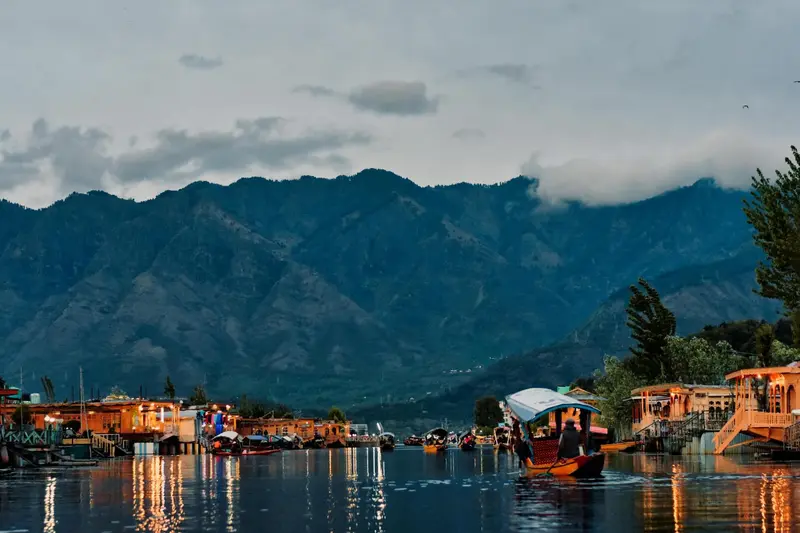
At 5:30 PM, I boarded a Shikara for a slow paddle through the lily gardens. The water of Nigeen is cleaner than the Dal, and the silence is profound. We passed the "Floating Gardens" where local farmers grow pumpkins and tomatoes on mats of lake-weed.
As the sun dipped behind the Hari Parbat Fort, the call to prayer (*Azaan*) began to echo from the mosques across the water. It’s a sound that doesn't just fill the air; it vibrates in your chest. I spent two hours just drifting, watching the kingfishers dive and the lotus flowers close for the night.
---
4. Day 2: Gardens of the Great Mughals & Old City Echoes
Srinagar is a city of layers. My second day was about peeling them back.
The Mughal Gardens: Symmetry and Soul
I started early at Nishat Bagh (The Garden of Joy). Built in 1633, it is a twelve-terrace garden that represents the zodiac signs. In 2026, the gardens are strictly "Plastic-Free Zones," and the local administration has restored the original limestone water channels.
Walking up the terraces, with the Zabarwan mountains at my back and the lake at my feet, I understood the Mughal obsession with symmetry. At Shalimar Bagh, I sat under a massive Chinar tree. These trees are the soul of Kashmir. Their leaves turn a fiery orange in autumn, but even in spring, their vast canopy offers a green sanctuary.
Crossing the Seven Kadals
In the afternoon, I headed "Downtown" to the Old City. This is the real Srinagar, away from the tourists. I walked across the Zaina Kadal (the first of the seven historic bridges). The architecture here is a unique blend of wood and brick, with houses overhanging the Jhelum River.
I found myself at the Jamia Masjid. This massive mosque, built in 1394, doesn't have a traditional dome; it has 378 wooden pillars made from single Deodar logs. The silence inside the courtyard, under the open sky, is a stark contrast to the lively copper markets right outside.
The Bakery Secret: If you visit the Old City, find a Kandur (local baker). I bought a fresh *Lavasa* (a thin, soft bread) and ate it hot with local salty butter. It’s the true taste of a Kashmiri morning.
---
5. Day 3: Gulmarg – Scaling the Roof of the World
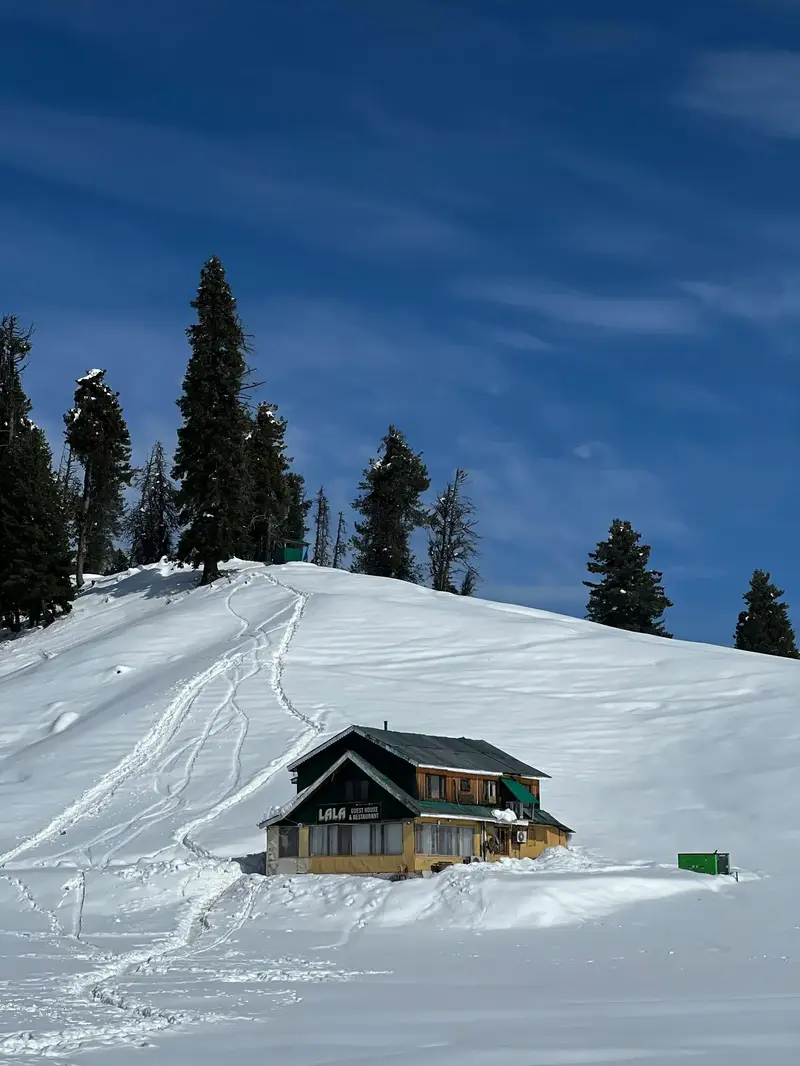
On Day 3, we climbed. The drive from Srinagar to Gulmarg (approx. 2.5 hours) is a transition from the watery valley to the high alpine meadows.
The 2026 Gondola Gambit
Let’s be honest: the Gulmarg Gondola is a logistical beast. In 2026, you cannot "show up" and buy a ticket. I had booked my Phase 2 tickets exactly 30 days in advance on the official JKCCC portal.
Phase 1 took me to Kongdori (approx. 8,500ft), where the air started to thin and the cedar trees gave way to pine. But Phase 2 is the game-changer. It takes you to Apharwat Peak at 13,800ft.
As the cabin breached the clouds, the entire Pir Panjal range revealed itself. To the north, I could see the faint outline of Nanga Parbat in the distance. I spent an hour at the summit, just breathing. The "Quiet Zone" initiative here ensures that the loudest noise you hear is the wind whistling through the jagged rocks.
The Silent Saints
Instead of taking the Gondola back down immediately, I decided to walk the St. Mary's Church trail. Tucked away in a small valley, this Victorian-era church looks like it was plucked from the Scottish Highlands. It was built in 1902 and remains a symbol of the pluralistic history of the valley. The graveyard next to it, with its weathered headstones, tells the story of the many who fell in love with these hills and never left.
---
6. Day 4: The Lidder’s Song – Pahalgam Bound
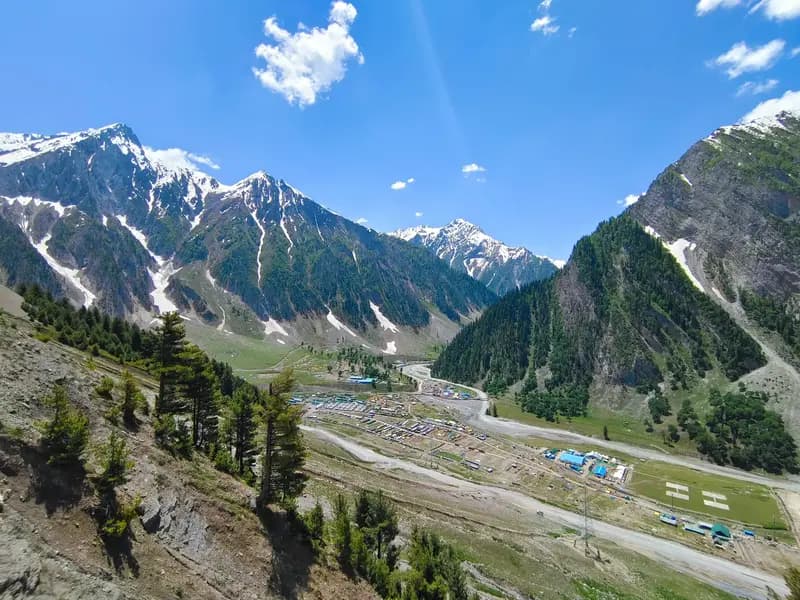
Traveling from Srinagar to Pahalgam is a transition from the lake-centered calm to the rushing, rocky energy of the deep mountains.
The Saffron Trail: Pampore’s Gold
About 45 minutes out of Srinagar, I hit Pampore. In October or November 2026, the Saffron harvest is a violet sea. But even in spring, the plateau is worth a stop. I visited a local Saffron farm-stay where I learned that it takes 75,000 flowers to produce just 500 grams of pure Kashmiri Saffron.
2026 Authenticity Hack: Never buy Saffron from a roadside stall. Buy it from a government-certified farm-stay. If the threads are perfectly red and a single thread turns water yellow (not red), you’ve found the real gold.
Avantipura: The 1,000-Year-Old Story
We stopped at the Avantipura Ruins. Built in the 9th century by King Avantivarman, these temples to Vishnu and Shiva are a testament to the Hindu heritage of the valley. In 2026, the archaeological site is beautifully maintained. I spent an hour walking between the intricately carved stone pillars, imagining the grandeur of a capital that existed a millennium ago.
Arrival in Pahalgam: The Riverside Magic
Pahalgam (The Valley of Shepherds) is where the Lidder River becomes your constant companion. In 2026, the trend is staying in Riverside Cottages rather than large hotels.
I stayed at the Riverwalk Resort, where my balcony literally hung over the lidder. The sound of the water doesn't just block out the world; it becomes the rhythm of your day. I spent my afternoon at the Aru Valley, 12km from the main market. It’s a sub-alpine meadow surrounded by jagged peaks. For any photographer, Aru is a masterpiece of light and shadow.
---
7. Day 5: The Valleys of Betaab and the Shepherd’s Path
My penultimate day was about deep nature.
Betaab Valley: Cinematic History
Named after the 1983 Bollywood movie *Betaab*, this valley is stunning. In 2026, local authorities have restricted all plastic and commercial activity inside the park. The result? A pristine meadow where the Lidder flows slowly, reflecting the pine forests. I spent my morning sitting on a rock by the river, watching the local Gujjar and Bakarwal shepherds moving their flocks to higher pastures.
Chandanwari: The High Threshold
Further up the road lies Chandanwari, the starting point of the holy Amarnath Yatra. Even if you aren't a pilgrim, the drive is spectacular. We reached the high snow bridge where the air is noticeably colder.
Dinner Secret: For my final night, we returned to the Pahalgam market for Wazwan. This is the traditional 36-course Kashmiri feast. I recommend a "Mini-Wazwan" for two people. You have to try the Rista (meatballs in red gravy) and the Gushtaba (silky-smooth meatballs in yogurt gravy). It’s not just a meal; it’s a cultural ceremony.
---
8. Day 6: The Last Kehwa & Departure
Leaving Kashmir is never easy. My final morning was spent in the Srinagar Marketplace. I visited the Floating Post Office—it’s the only one of its kind in the world. Sending a postcard from a boat on the Dal Lake is a ritual every traveler should enjoy.
As my taxi headed back to the airport, I looked back at the Zabarwan range. Kashmir is a land that demands your patience and rewards your stillness. As they say in the valley, "He who visits Kashmir once, never leaves."
---
9. The 2026 Traveler's Survival Toolkit
Transport Logistics
Budgeting for 2026 (6 Days)
Packing List: The "Mountain-Chic" Kit
---
10. Massive FAQ: Your 2026 Kashmir Questions Answered
Q: Is Kashmir safe for solo travelers in 2026?
A: Absolutely. The hospitality is legendary, and the local tourism infrastructure is highly protective of travelers. Just follow the local advice on which areas are open.
Q: Can I get a local SIM card?
A: Prepaid SIM cards from other Indian states DO NOT work. You must have a postpaid connection or buy a local SIM at the airport (requires Aadhaar and the process takes 3-4 hours).
Q: What is the "Floating Market" secret?
A: Go at 5:00 AM. That’s when the local farmers trade their produce on the Dal Lake. By 8:00 AM, it’s mostly for tourists. The real magic is in the pre-dawn mist.
Q: How do I spot a fake Pashmina?
A: A real Pashmina shawl is so fine it can pass through a wedding ring (the "Ring Test"). Also, look for slight irregularities—hand-spun Pashmina is never 100% uniform like machine-made wool.
Q: Best café in Srinagar for digital nomads?
A: Chai Jaai on the Bund. It has the best Kehwa and a stunning interior inspired by Kashmiri tiles and handlooms.
---
*Ready to write your own Kashmiri story? Book our 6-Day Kashmir Paradise Special today!*