The Cave Secrets of Arki: My Journey to Lutru & Mutru Mahadev
The Cave Secrets of Arki: My Journey to Lutru & Mutru Mahadev (2026)
1. Introduction: The Unmapped Echoes of Baghal
I remember the exact moment the GPS on my phone started to waver as I turned off the main Shimla-Bilaspur highway towards Arki. It wasn't a loss of signal; it was as if the modern world was gently suggesting that I shouldn't be here. Most travelers racing towards the "Queen of Hills" (Shimla) treat Arki as a blurred landscape in their window, a mere 40km detour they can’t afford.
But I’ve learned that the best Himalayan stories aren't found on the Mall Road. They are found in the rugged, limestone-etched ridges of the Solan district, where the "Har Ki Nagari" (Arki) sits like a time capsule. One of my favorite detours is the road trip to Badi ki Dhar.
In 2026, as travelers seek "Deep Travel"—experiences that require both physical effort and spiritual openness—the cave temples of Lutru and Mutru Mahadev have emerged as the final frontier for those who find peace in the silence of stone. I spent three days here, trekking between these ancient shrines, and what I found was a level of mysticism that even the most famous temples in Himachal can't replicate. This is my firsthand account of discovering the cave secrets of Arki.
---
2. The 1621 Vision: A Raja’s Dream and a Mountain’s Soul
To understand Arki, you must understand the princely state of Baghal. Founded in the 17th century, Baghal was always a land of warriors and sages. But it was in 1621 that the most significant chapter of its spiritual history was written.
Sitting in a small local cafe near the Old Bus Stand, I met a local elder, Mr. Thakur, who spoke about the Raja of Baghal. "The King didn't just decide to build a temple," he told me while pouring a cup of steaming ginger tea. "Lord Shiva appeared in his dream. He saw a massive cave on the highest ridge of Arki, where a self-manifested (*Swayambhu*) Shivling was waiting to be discovered."
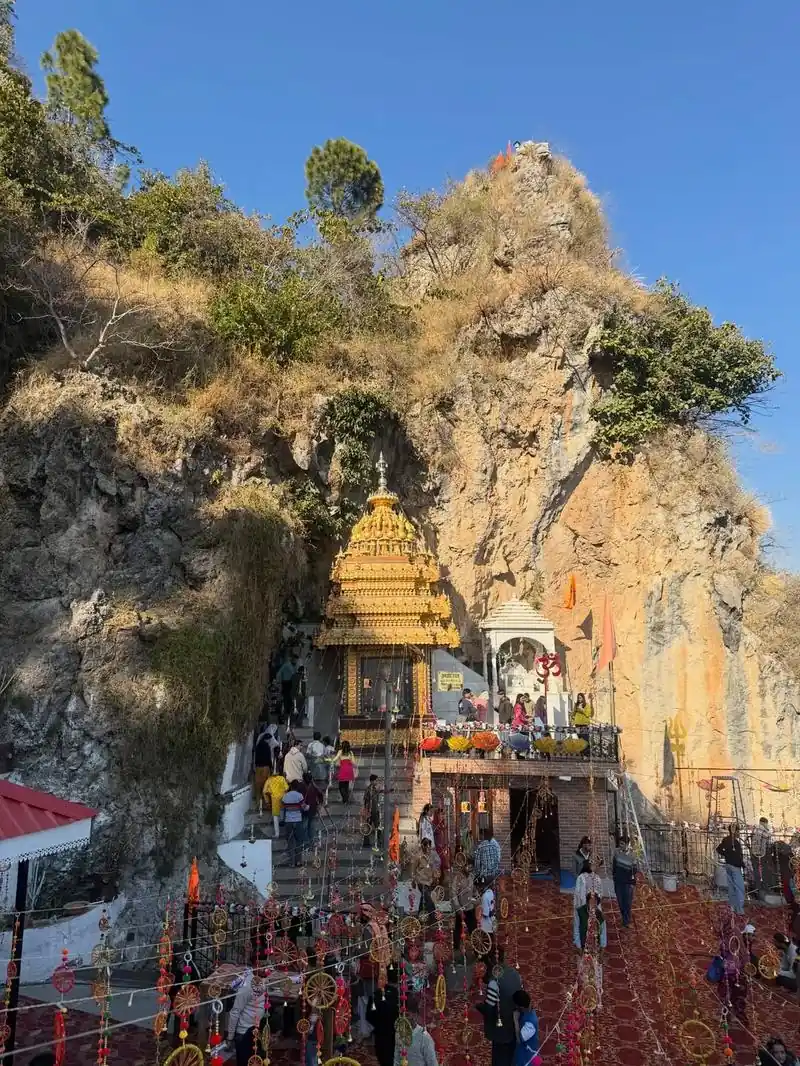
The Raja followed the dream, climbing the steep cliffs of the Shivalik range until he found the opening. Inside, he didn't find a statue carved by men; he found a rock formation that pulsed with an energy he had never felt before. That cave became Lutru Mahadev.
In 2026, that 400-year-old story still feels alive. As I looked up at the ridge from the town center, the temple wasn't a grand spire of marble. It was a dark, inviting mouth in the mountain, watching over the valley like a silent guardian.
---
3. The Ascent to Lutru Mahadev: Geometry of the Divine
The trek to Lutru Mahadev is a litmus test for your endurance. Perched at an altitude that offers a 360-degree view of the Solan hills, the path is a series of steep stone steps and winding trails that cut through pine and oak forests.
The 2026 Trekking Reality
As I reached the final stretch, the cave revealed itself. It is a massive natural limestone cavern—roughly 61 feet long and 31 feet wide. But the geography isn't what takes your breath away; it’s the light.
The Circular Opening: Nature’s Spotlight
In a stunning display of natural geometry, there is a circular opening in the roof of the cave. In 2026, if you time your visit for around 10:30 AM (during the summer months), the sun aligns perfectly with this opening. A single, solid beam of light descends like a divine spotlight, hitting the Swayambhu Shivling directly.
I stood there in the damp, cool air of the cave, watching the dust motes dance in that pillar of light. There was no bell ringing, no chanting—just the sound of water dripping from the stalactites onto the stone floor. It was the most profound silence I have ever experienced.
---
4. The Folklore of "Lutru": The Snatcher of Sorrows
The name "Lutru" carries a heavy weight in the local Pahadi dialect. According to the priest I spoke with inside the cave—a man whose family has served the deity for generations—the name comes from the word "Lutru," meaning "The Snatcher."
He doesn't snatch your wealth," the priest explained, his eyes reflecting the flickering oil lamp. "He snatches your sorrows (*Dukh*). He snatches the burdens you carry on your spirit.
The Miracle of the Sacred Milk
There is an old legend that once, milk used to drip naturally from a specific rock formation above the Shivling. The story goes that a curious person once touched the spot with their finger, and the "miracle" ceased instantly—a reminder from the mountain that the divine must be respected, not poked.
In 2026, while the milk is gone, the moisture remains. The cave stays at a constant 18°C, even when the temperature outside in Arki hits 35°C. It is nature’s own air-conditioned sanctuary.
---
5. Mutru Mahadev: The Secluded Twin
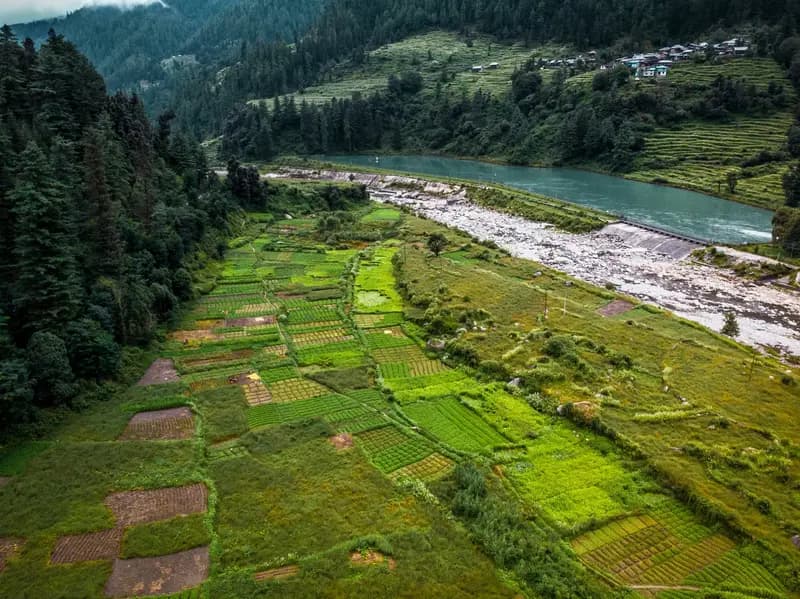
Continuing my journey, I headed towards the northern fringes of Arki. If Lutru Mahadev is the "High Sovereign" of Baghal, Mutru Mahadev is its "Hidden Sage." The trail to Mutru is significantly different; it winds through a lush green valley, shaded by ancient deodars and pines.
The 2026 Seclusion Vibe
In 2026, while Lutru attracts the sunrise pilgrims, Mutru remains a sanctuary for those who seek deep introversion. I walked for about 3km through a series of terraced fields and small hamlets where the locals still offer you "Khatta" (a traditional spicy and sour delicacy) if you stop to ask for directions.
The cave of Mutru Mahadev is smaller than Lutru's, but it feels more "lived-in" by the divine. The stone walls here are covered in natural moss, and the air is filled with the scent of wild jasmine.
---
6. Arki Fort: The 18th-Century Sentinel
After the spiritual intensity of the caves, I visited the Arki Fort. Built between 1795 and 1805 by Rana Prithvi Singh, it is a stunning piece of Rajput and Mughal-inspired architecture.
2026 Heritage Stay
In 2026, part of the fort has been beautifully restored into a Heritage Hotel. I walked through the "Vakheel Khana" (the courtroom) and the "Diwan-e-Khas," where the walls are adorned with the famous Arki Murals. These paintings, executed in the *Pahari* style, depict scenes from the Ramayana, the Mahabharata, and the hunting expeditions of the Rajas.
Standing on the western bastion at sunset, I could see the entire Shivalik range glowing in a shade of amber. To the north, the snow peaks of the Dhauladhar were just barely visible. It’s the kind of view that explains why the Baghal kings chose this spot.
---
6. The 2026 Traveler’s Logistics: Reaching and Staying
In 2026, Arki has moved from "Abandoned" to "Offbeat Elite." The infrastructure is much better, but the soul remains intact.
How to Reach Arki
1. From Chandigarh (105km): The 2026 route through the Pinjore-Baddi corridor is smooth. I hired a private EV taxi from Chandigarh, which took about 3.5 hours.
2. From Shimla (40km): A quick 1.5-hour drive via the Shalaghat route. If you’re a solo traveler, the local HRTC buses from Shimla’s ISBT depart every hour towards Arki.
Where to Stay
---
7. The Ultimate 3-Day Arki Cave & Heritage Itinerary (2026)
To "feel" Arki, you cannot rush it. Here is my recommended path for a deep-dive experience.
Day 1: The High Sovereigns
Day 2: The Hidden Valleys
Day 3: The Artist’s Perspective
---
8. Photography Guide: Capturing the Cave Mysticism
In 2026, photography in sacred caves requires a mix of technical skill and cultural respect.
1. Low-Light Mastery: Do not use a flash. It flattens the texture of the ancient limestone and disturbs the spiritual vibe. Use a fast lens (f/1.8 or f/2.8) and push your ISO.
2. The Beam Shot: To capture the 10:30 AM beam at Lutru Mahadev, use a slight underexposure (-1 EV) to make the light look more solid and divine.
3. Mural Details: At the Fort, use a macro lens if you have one. The details in the eyes of the painted deities are incredible.
4. Etiquette: Always ask the priest (*Pujari*) before photographing the main idol. Some areas are strictly "No Camera" zones.
---
9. A Culinary Deep-Dive: The Flavors of Baghal
You haven't traveled if you haven't tasted the local hearth. Arki’s food is influenced by its history as a princely state—it’s both rustic and royal.
---
10. 2026 Survival Guide: What to Pack
---
11. Frequently Asked Questions (FAQ)
Q: Is it safe for solo female travelers in 2026?
A: Absolutely. Arki is a small, closely-knit community. The local "Tourist Police" are stationed at the Fort and the Main Market.
Q: Can I visit both caves in one day?
A: Yes, if you start at 7 AM. Visit Lutru Mahadev in the morning, have a local lunch, and head to Mutru Mahadev in the afternoon.
Q: What is the altitude?
A: Arki sits at about 1,600 meters (5,250 ft).
Q: Are there wild animals on the trail?
A: You might spot Barking Deer or the occasional Leopard at night near the higher ridges. Treks are safe during daylight hours.
---
12. Conclusion: The Gift of the Cave
As I drove away from Arki, I looked back at the Lutru ridge. The cave was just a dark speck now, but its silence was still ringing in my head. In 2026, we spend so much time looking at screens that we forget what it feels like to look into the dark and see something ancient.
Arki is for the ones who want to stop racing. It’s for the ones who want to breathe where the sages breathed. It’s for the ones who know that sometimes, to find your way, you have to go into a cave.
---
Traveler’s Checklist for Arki (2026)
*Ready to find your silence? Explore our Offbeat Himachal Trails or book our Arki Heritage Special.*