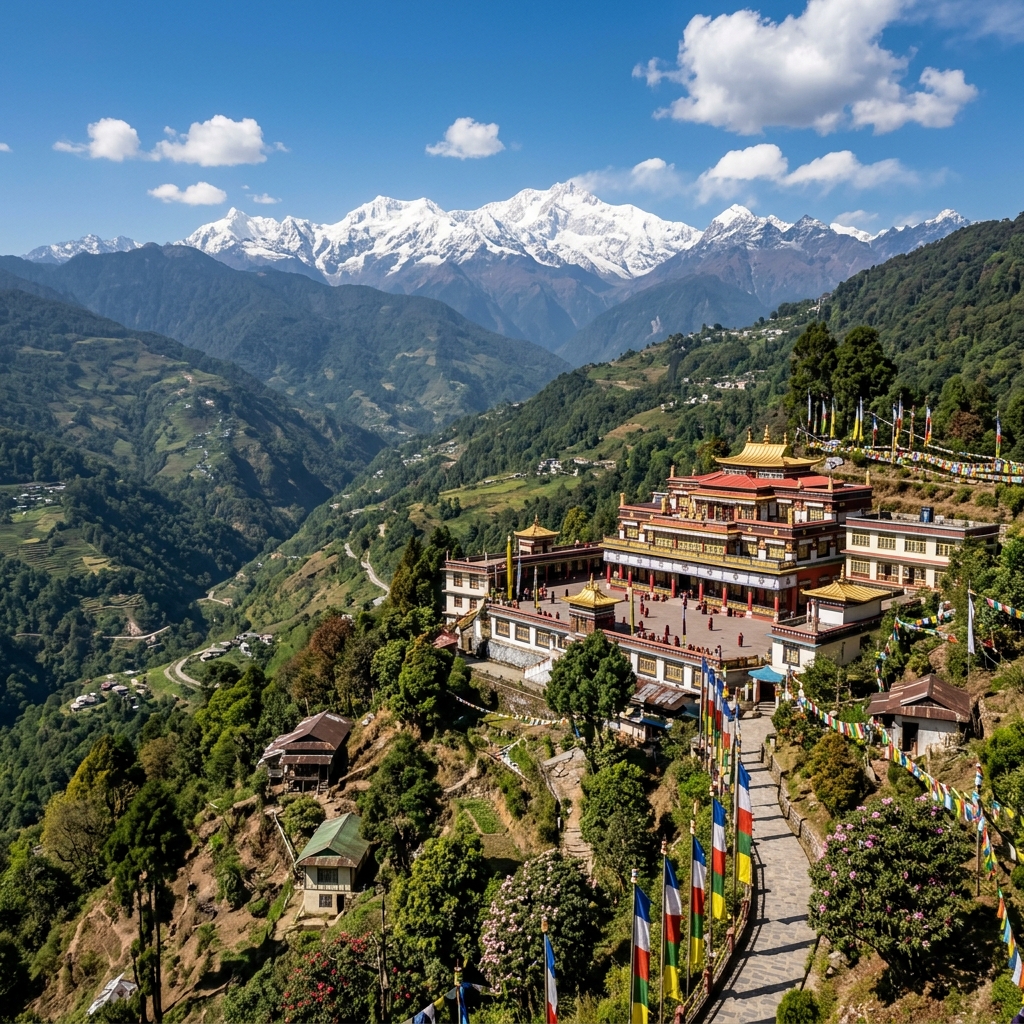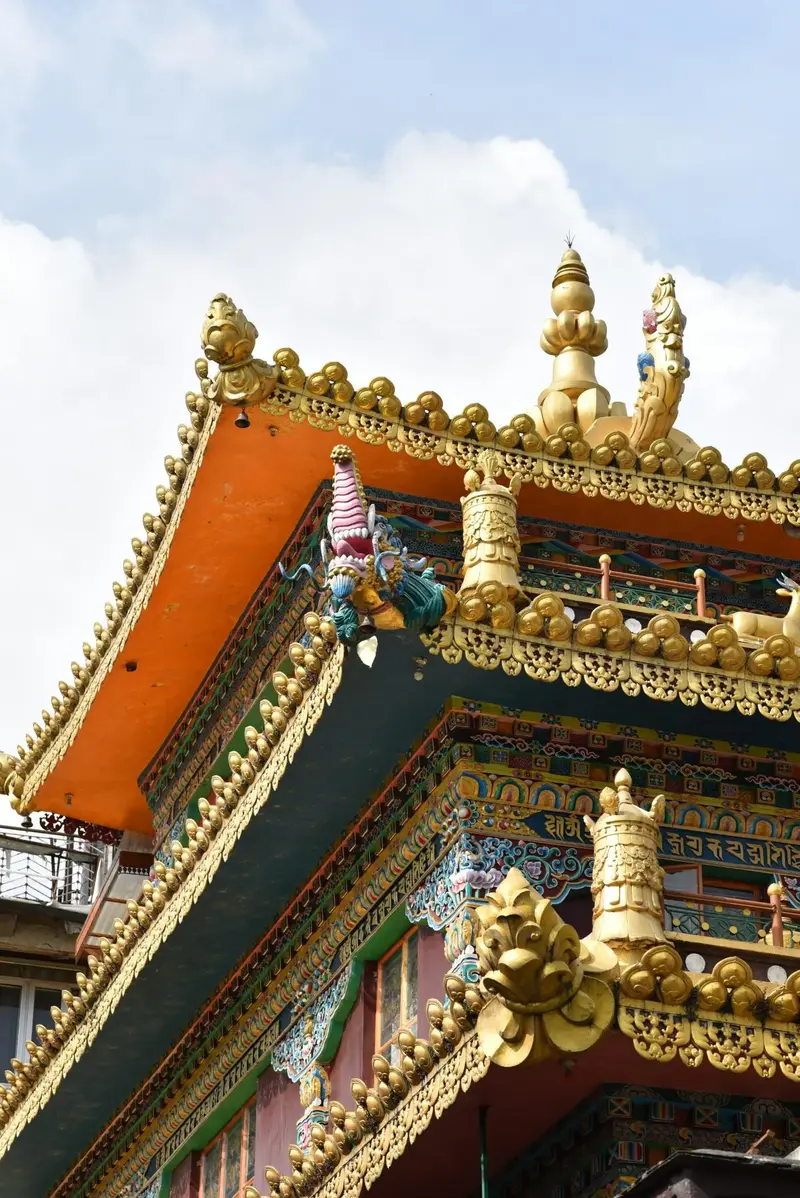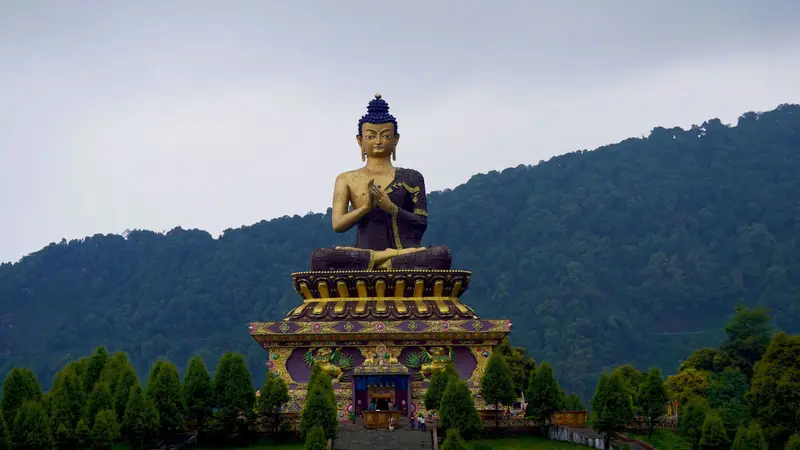
Gangtok occupies a ridgeline at 1,650 metres in the southern fold of the Sikkim Himalayas — a city of steep lanes, monastery bells, and the ever-present possibility of a Kanchenjunga view. The world's third-highest mountain (8,586 metres) stands 74 km to the northwest, and on mornings when the valley cloud hasn't built yet, it fills the northern horizon with a completeness that regularly stops people mid-sentence.
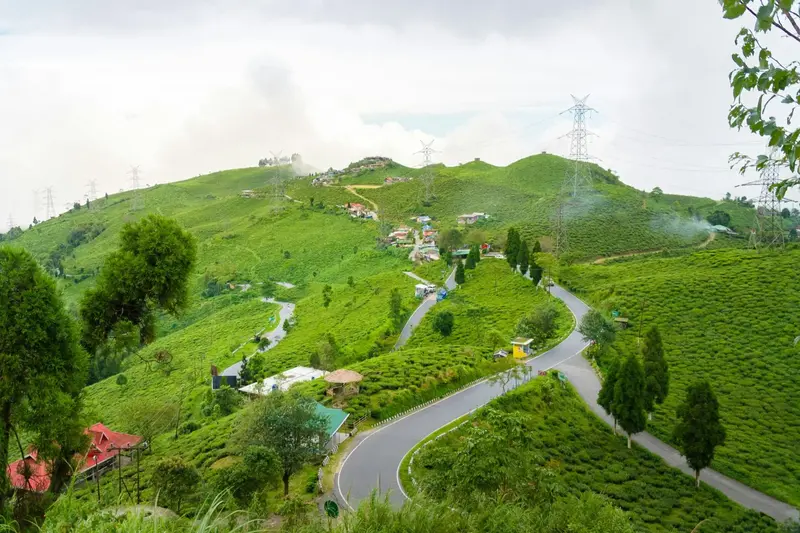
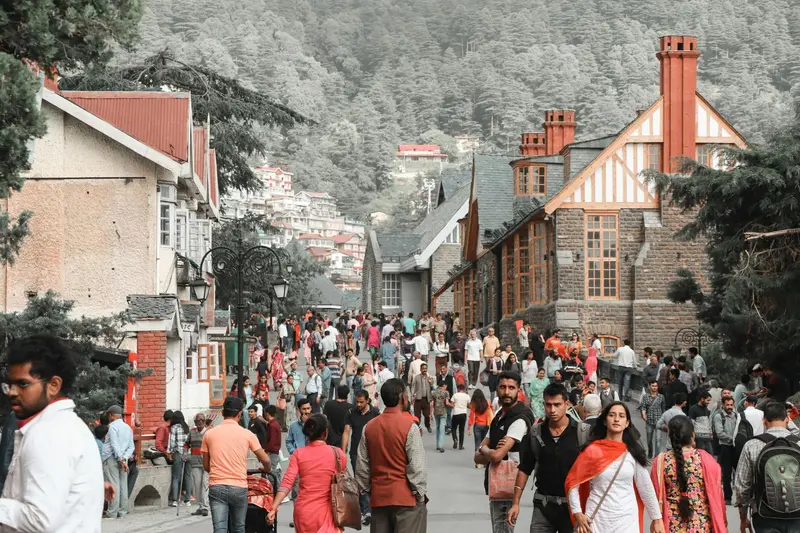
As Sikkim's capital and largest city, Gangtok functions as the practical hub for the state's monastery circuit, trekking routes, and border crossings. But the city has its own character independent of its role as a tourism gateway. The MG Marg pedestrian zone — clean, well-lit, and maintained to a standard unusual among Indian hill towns — gives Gangtok a civic identity that reflects Sikkim's consistent investment in liveable urban space. Beyond the main street, the city's residential ridges are covered in cardamom plantations and terraced fields that descend to the valley floor far below.
4.8 ★ Rated by 1.5L+ Travellers | Connect With An Expert
Best Time to Visit Gangtok
Spring (March to May) is the most celebrated season. Rhododendrons — Sikkim has over 36 native species — bloom across every altitude from the valley floor to the treeline. The famous Flower Show at White Hall showcases hundreds of orchid varieties alongside Sikkim's extraordinary endemic flora. Temperatures between 15°C and 22°C are comfortable, and Kanchenjunga views are clear before the pre-monsoon haze builds.
Autumn (October to November) runs a close second. Post-monsoon clarity brings the Himalayan panorama into sharp focus. The Kanchenjunga range appears close enough to touch from the Ganesh Tok viewpoint, and the light at dawn over the eastern Himalayas produces one of the finest mountain photography windows in India.
Monsoon (June to September) is heavy and consistent — Gangtok receives over 200 cm of annual rainfall, most of it between July and August. Roads to North and East Sikkim face regular closures. The city itself remains operational, but high-altitude excursions are limited.
Winter (December to February) clears the skies and quiets the town. Temperatures drop to 4°C–8°C in the city; upper elevations receive snow. The monastery circuit and local cultural experiences are unaffected by winter conditions.
How to Reach Gangtok
By Air
Pakyong Airport, 35 km from Gangtok, opened in 2018 and accepts larger aircraft than the previous constraints allowed. Daily flights connect Pakyong to Kolkata (1 hour) with connections to Delhi and Mumbai. The airport is Sikkim's only air gateway. A pre-booked taxi from the airport reaches Gangtok in approximately 45 minutes.
By Road
New Jalpaiguri (NJP) railway station in West Bengal, 124 km from Gangtok, is the standard rail approach. Share jeeps and private taxis connect NJP to Gangtok in four to five hours. Bagdogra Airport (130 km) serves as an alternative air gateway with broader connectivity. The National Highway 10 approach through Rangpo crosses into Sikkim at a border checkpoint — carry ID proof.
By Rail
No railway reaches Sikkim. New Jalpaiguri (NJP) is the standard onward point by road. Darjeeling Himalayan Railway (toy train) from NJP to Darjeeling is a heritage detour worth adding for travellers with time.
Local Cuisine to Try
Sikkimese cooking is distinct from the Nepali and Tibetan influences that surround it — fermented foods, specific grains, and preparations rooted in the Buddhist monastic tradition. Gundruk (fermented leafy vegetables, served as pickle or soup) is the defining local condiment — sharp, tangy, and found at every traditional meal. Chhurpi (dried yak cheese, aged hard or soft depending on application) is the mountain protein staple — the hard variety is chewed as a snack for hours. Thukpa and momos carry the Tibetan influence throughout, but Sikkimese momos are often wrapped in taro leaf rather than wheat dough. Tongba — fermented millet in a wooden vessel, topped with hot water and drunk through a bamboo straw — is the traditional winter drink and widely available in the MG Marg area.
Plan Your Gangtok Journey
Let Himalayan Escalate help you plan a Sikkim experience that includes inner line permits, monastery circuits, and the right season for Kanchenjunga views. Our ground team knows the permit system and seasonal conditions in detail.
Contact Us Today to start planning!
---
Travel With Himalayan Escalate