The Emerald Calendar: The Best Time to Visit Kerala (2026 Edition)
The Emerald Calendar: The Best Time to Visit Kerala (2026 Edition)
1. Introduction: Beyond the "Tropical" Stereotype
When I first told my friends I was heading to Kerala in the middle of July, they looked at me like I’d lost my mind. "It’s going to be a washed-out mess," they said. But as I sat on the porch of a traditional *Nalukettu* house in Wayanad, watching the monsoon clouds roll over the spice plantations like a slow-motion tidal wave, I realized how wrong the "standard" travel advice is.
Kerala isn't just a place of perpetual summer and coconut trees. It is a land of three distinct souls, each governed by its own rhythm of wind and rain. In 2026, as the world moves toward "conscious and slow travel," Kerala has become the ultimate destination for those who want to time their journey not just by the weather, but by the energy of the land.
Whether you want the sun-drenched gold of the Varkala cliffs, the misty silence of Munnar’s tea estates, or the deep, earth-scented healing of a monsoon Ayurvedic retreat, timing is everything. This is my firsthand, month-by-month guide to finding your perfect Kerala moment in 2026.
---
2. The Winter Peak (October - February): Golden Skies & Backwater Bliss
This is the Kerala you see on the postcards, and for good reason. From late October to February, the state is in its "prime." The heavy monsoon rains have retreated, leaving behind a landscape so green it almost looks artificial.
December: The Fort Kochi Carnival
If you find yourself in Kerala in December, there is only one place to be: Fort Kochi. I spent New Year’s Eve here in 2025, and the vibe is unlike anywhere else in India. The town is draped in "Pappani"—massive Santa-like effigies that are burned at midnight to signify the end of the old year. The streets are a riot of art (thanks to the Biennale cycle), music, and some of the best seafood I’ve ever tasted.
January & February: The Alleppey Window
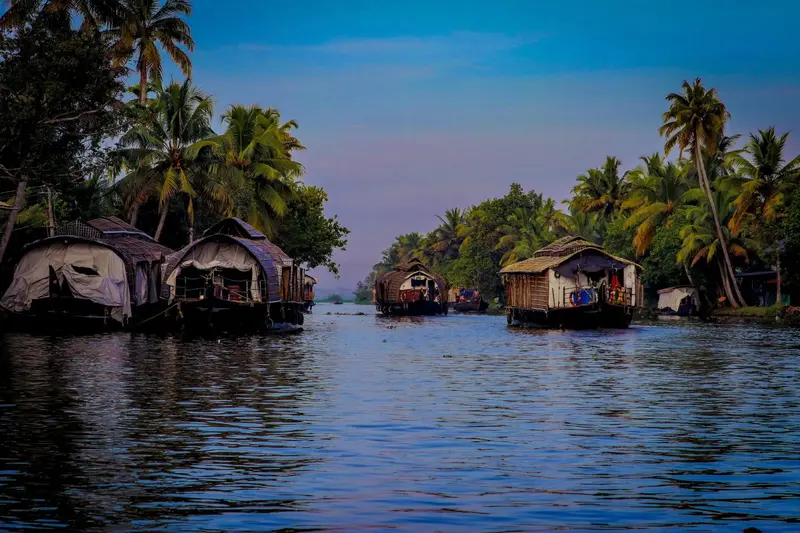
For those dreaming of the backwaters, January is the gold standard. I rented a small, traditional wooden Kettuvallam (houseboat) in Alleppey. At night, the temperature drops just enough to make the lack of AC a blessing. The water is calm, the lilies are in bloom, and the light at 5 PM is a photographer’s dream.
---
3. The Summer Escape (March - May): Chasing the Altitudes
By March, the heat starts to bake the plains. Kochi and Trivandrum can hit a humid 35°C, which feels much hotter due to the moisture. This is when I do what the locals do: I head for the hills.
Munnar: The High-Altitude Retreat
Munnar at 5,200 feet is a different world. While the coast is sweltering, I found myself reach for a light sweater in the evenings. The tea gardens act as natural air conditioners.
The Thrissur Pooram Experience (April/May)
If you can handle the heat, April offers the most spectacular cultural event in India: the Thrissur Pooram. I stood among thousands of people at the Vadakkunnathan Temple, vibrating with the sound of 200 *Chenda* drummers. It is loud, intense, and chaotic, featuring dozens of decorated elephants and a firework display that rivals anything in the world.
---
4. The Monsoon Rejuvenation (June - August): The Emerald Soul
In 2026, "Monsoon Tourism" is no longer a niche. It is a movement. The monsoon in Kerala (the *Edavappathi*) is more than just rain; it is the lifeblood of the state.
The Science of "Karkidakam" Ayurveda
July is traditionally the month of *Karkidakam* in the Malayalam calendar. I checked into a wellness center in Palakkad for a 7-day detox. Why July? Practitioners explained that the high humidity opens the pores of the skin, making the body more receptive to herbal oils and the *Panchakarma* process.
Onam and the Boat Races
By August, the rain eases into the "Shingam" month. This is the time of Onam, the harvest festival. I participated in a traditional *Sadya* feast—26 different dishes served on a banana leaf. But the real highlight? The Nehru Trophy Boat Race in Alleppey. Watching a hundred men row a single "Snake Boat" in perfect synchronization is a sight that defines the spirit of Kerala.
---
5. The Month-by-Month Deep Dive: A 2026 Breakdown
January: The Post-Monsoon Gold
Weather: 23°C to 29°C. Dry and cool.
Head to North Kerala (Kannur/Kasaragod) for the Theyyam season. It’s a intense, spiritual experience involving elaborate costumes and ritualistic dancing that usually happens in the courtyard of local temples (*Kaavu*).
February: Beach Bliss
Weather: 24°C to 31°C. Consistent sun.
Varkala is the place to be. The cliffs are at their most vibrant, and the surf is perfect for beginners. Rent a scooter and head to Kappil Beach for a sunset that will change your life.
March: Heat and Elephants
Weather: 26°C to 34°C. Humid.
Visit Thekkady (Periyar National Park). As the water sources dry up in the deep jungle, elephants congregate at the lake’s edge. Take the early morning boat safari.
April: The Festival of Fire
Weather: 28°C to 35°C. Very hot.
Must experience the Thrissur Pooram. However, be prepared for massive crowds. Book a hotel in Thrissur at least 4 months in advance.
May: The Summer Highs
Weather: 28°C to 34°C. Pre-monsoon showers.
Wayanad is your sanctuary. The high-altitude coffee plantations remain a few degrees cooler than the coast. Visit the Edakkal Caves before the rains make the paths slippery.
June: The Monsoon Entrance
Weather: 24°C to 28°C. Heavy, dramatic rain.
Watch the monsoon break at Alappuzha (Alleppey). The sight of the rain hitting the backwaters is ethereal. Houseboat rates are at their lowest—often 40% cheaper than in December.
July: The Healing Month
Weather: 23°C to 27°C. Cool and constant drizzle.
Ayurveda. This is the time for a 14-day *Karkidakam* treatment. Your body will thank you for the next year.
August: The Cultural Peak
Weather: 24°C to 29°C. Easing rain.
Onam. Try to find a local "Sadya" feast. In 2026, many homestays offer "Sadya Experiences" where you can help cook the traditional dishes.
September: The Post-Monsoon Green
Weather: 24°C to 30°C. Emerald landscapes.
Hiking in Munnar. The tea estates are at their greenest, and the waterfalls are in full surge. Attukad Waterfalls is a must-visit this month.
October: The Shoulder Season
Weather: 24°C to 31°C. Pleasant mornings.
Vagamon. It’s a less-crowded hill station with rolling meadows and pine forests. Perfect for paragliding before the peak winter crowds arrive.
November: Backwater Calm
Weather: 23°C to 30°C. Clear skies.
Kumarakom. Birdwatching at the sanctuary is world-class this month as migratory birds begin to arrive from Siberia.
December: The Festive Finale
Weather: 22°C to 29°C. Perfect.
Fort Kochi. Experience the "Cochin Carnival." The burning of the "Pappani" on New Year’s Eve is a memory you’ll never forget.
---
6. Special Interest Timings: What’s Your Element?
Depending on your passion, the "best" time might shift:
---
7. 2026 Logistics: Navigating the Emerald State
Kerala’s infrastructure has evolved significantly in 2026.
The Kochi Water Metro
If you land in Kochi, don't just take a taxi. The Kochi Water Metro—a fleet of electric, air-conditioned boats—now connects the main islands. It’s the most scenic (and sustainable) way to get from the city to Vypin or Fort Kochi.
KSRTC Swift & Electric Buses
For long-distance travel (e.g., Kochi to Munnar), the KSRTC Swift buses have redefined public transport in Kerala. The "Gajaraja" AC sleeper berths are excellent for overnight journeys to North Kerala.
2026 Safety Note: Monsoon Hiking
While the monsoon is beautiful, avoid mountain trekking during heavy "Red Alert" days in Munnar and Wayanad. Landslides are a real risk. Always check the KSDMA website for live updates before heading into the hills in July.
---
8. Conclusion: Choosing Your Element
After all my travels through this state—from the mist of the Ghats to the salt spray of the Arabian Sea—I’ve realized that Kerala doesn't have a "bad season."
It only has different moods.
If you want the energy of a festival and the golden glow of the sun, come in January.
If you want the deep, soul-cleansing silence of the Earth, come in July.
And if you want to see nature at its most vibrant and powerful, come in September.
Kerala is waiting for you, whenever you decide to arrive. Just remember to pack a good umbrella and an open heart.
---
Kerala Seasonal Checklist (2026)
*Ready to plan your escape? Check out our Best of Kerala Itinerary or explore the Notable Spots of North Kerala.*