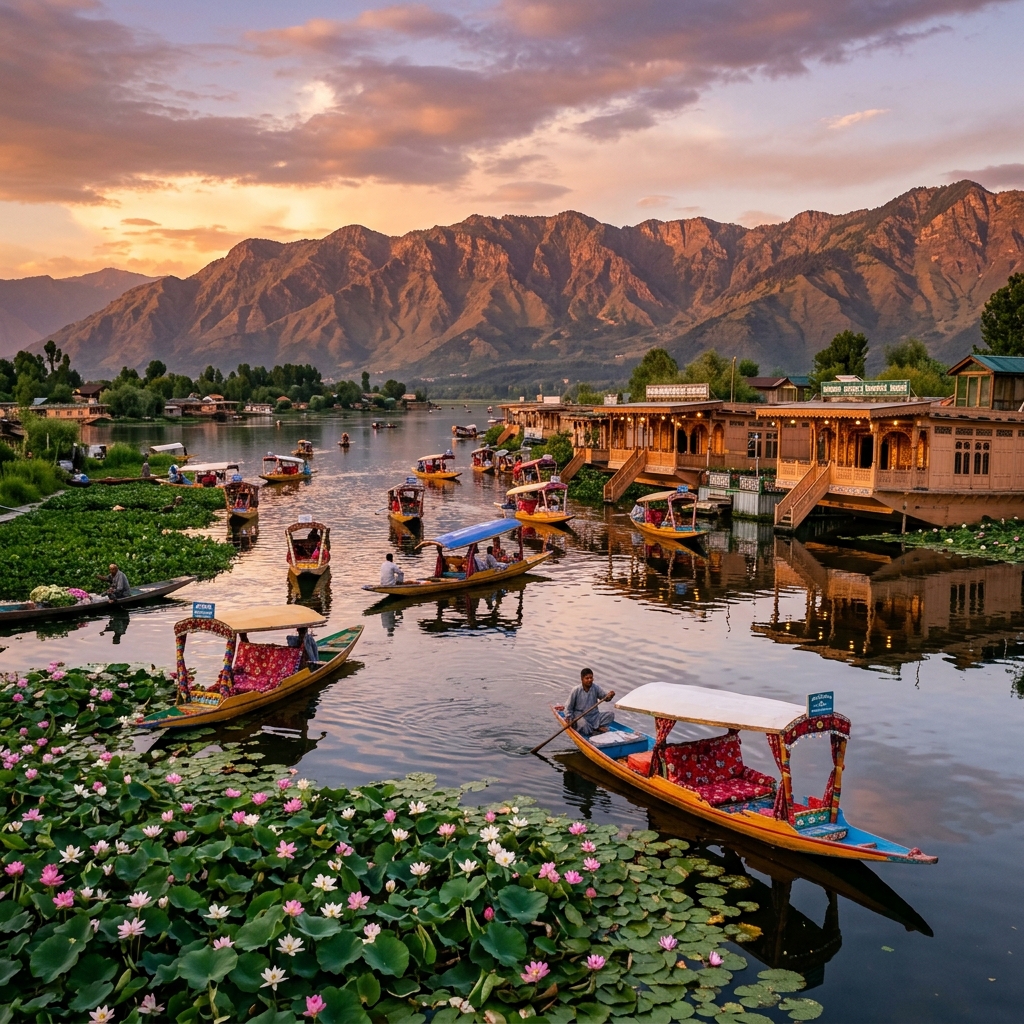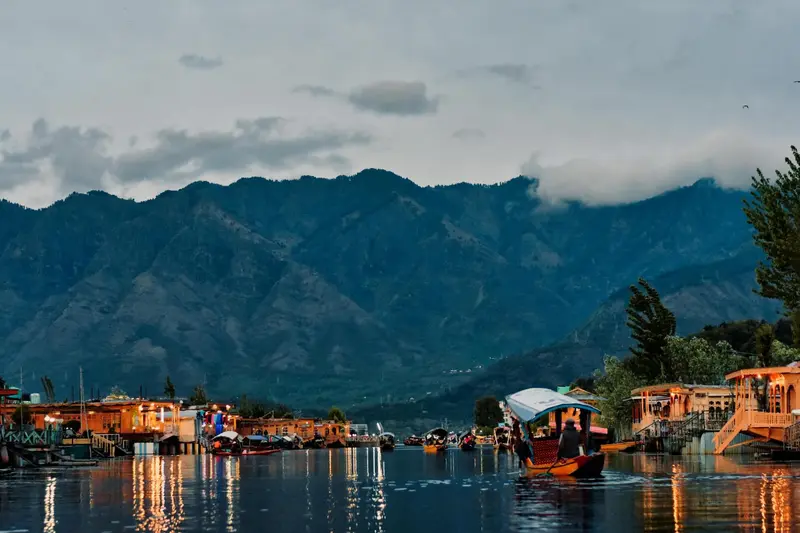
At 1,585 metres in the Kashmir Valley, ringed by mountains and centred on a lake that has been the subject of poetry for eight centuries, Srinagar occupies a position in the Indian imagination that no other hill destination quite matches. The Dal Lake spreads across 18 sq km of the city's eastern edge — a working landscape of floating gardens, wooden houseboat communities, and shikara traffic that has sustained a unique aquatic culture since the Mughal emperors brought their courts here for summer.
The city's reputation as paradise is not merely Mughal propaganda. The Zabarwan range forms the eastern wall; the Pir Panjal closes the south; the Jhelum River meanders through the old city past mosques, shrines, and craft workshops that have operated continuously for centuries. Spring brings chinar trees into full canopy and gardens of tulips and irises that are planted specifically for this three-week window. Autumn turns the chinar leaves copper and gold against a backdrop that makes the whole valley look like a painting someone decided to live inside.
4.9 ★ Rated by 3L+ Travellers | Connect With An Expert
Best Time to Visit Srinagar
Spring (March to May) is the headline season. The Tulip Garden at Siraj Bagh opens for a three-to-four-week window in early April — the largest tulip garden in Asia, with 1.5 million blooms arranged across terraced hillsides above Dal Lake. The chinar trees (Platanus orientalis) emerge in full leaf, and the Mughal gardens reach their most photogenic state. Book accommodation two to three months ahead for the April tulip peak.
Summer (June to August) brings the family tourism wave from across India — school holidays, consistent mountain weather, and the full roster of outdoor activities. Dal Lake houseboats fill quickly; the Gulmarg gondola queues extend; Sonamarg and Pahalgam are at peak capacity. The weather is reliably pleasant (20°C–28°C), and the city's hospitality infrastructure operates at its highest capacity.
Autumn (September to November) is the season that returns visitors. The summer crowds thin after September, the chinar trees turn through gold and orange and red over October, and the light over Dal Lake in the afternoons creates an atmosphere that photographers chase every year. Apple and saffron harvest in October coincides with the valley's most beautiful month.
Winter (December to February) brings snow to Gulmarg (one of the best ski destinations in Asia) while Srinagar itself receives light snowfall that transforms the lake and gardens into a monochrome landscape. Houseboats come equipped with kangri (traditional charcoal heaters) and pashmina blankets.
How to Reach Srinagar
By Air
Sheikh ul-Alam International Airport serves multiple daily flights from Delhi (1.5 hours), Mumbai (2.5 hours), Bangalore, and other major cities. The airport is 15 km from the city centre; pre-booked taxis reach Dal Lake hotels in 25 to 35 minutes. Weather-related delays occur occasionally during winter fog; check flight status before heading to the airport.
By Road
The Jammu-Srinagar National Highway 44 (formerly NH 1A) covers 290 km through the Banihal tunnel and Jawahar tunnel — the route that keeps Kashmir connected to the rest of India year-round. The journey takes seven to nine hours from Jammu depending on traffic and weather. Our Kashmir Paradise Tour packages road transfers with professional mountain drivers and comfortable AC vehicles.
By Rail
The Udhampur-Srinagar-Baramulla Rail Link is progressively extending rail connectivity toward the valley — the section to Banihal is operational, with the critical Banihal-Khari-Srinagar section under construction. Until the full link is complete, Jammu Tawi railway station (305 km) is the standard rail gateway, with road transfer completing the journey.
Local Cuisine to Try
Kashmiri cuisine is built around a culinary tradition called Wazwan — a ceremonial multi-course meal prepared by specialist cooks (wazas) that can feature thirty-six dishes. At its heart is lamb: Rogan Josh (slow-braised in Kashmiri red chilli and whole spice), Yakhni (lamb in a yogurt and fennel broth), Dum Aloo (baby potatoes in a rich tomato and fennel sauce), and Seekh Kebab (minced lamb on skewers, charcoal grilled). Kahwa — green tea with saffron, cardamom, and dried fruits — is the defining drink of the valley; a full Kashmiri breakfast includes kahwa alongside bread, honey, and fresh cream from local dairies. Noon Chai (salt tea, pink from the specific variety of tea leaves) is the local preference; visitors find it an acquired taste worth acquiring.
Plan Your Kashmir Journey
Let Himalayan Escalate help you plan a Srinagar trip with the right houseboat, season, and cultural experiences. Our Kashmir ground team manages everything from airport transfers to Wazwan dinner reservations.
Contact Us Today to start planning your Kashmir journey!
---
Travel With Himalayan Escalate