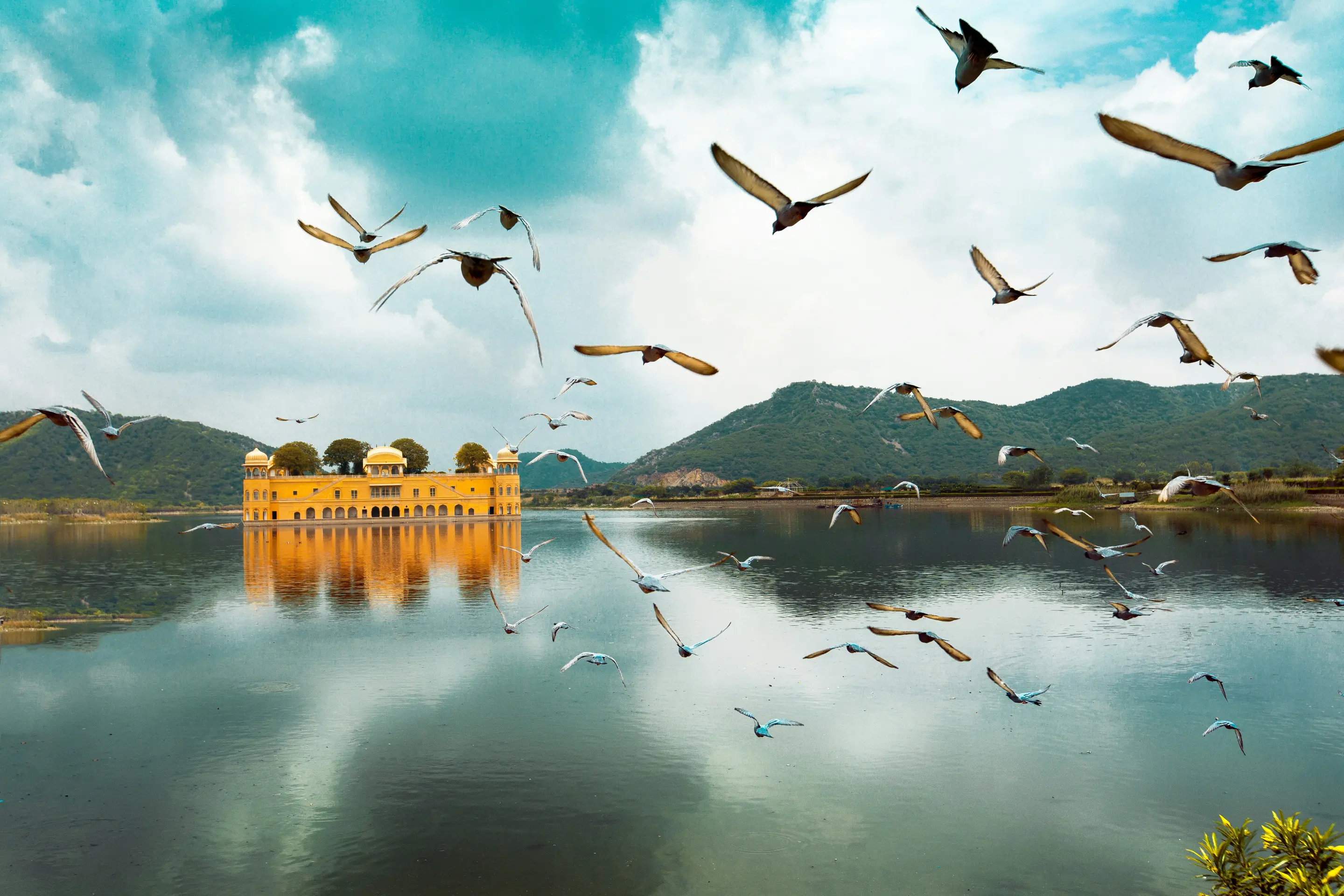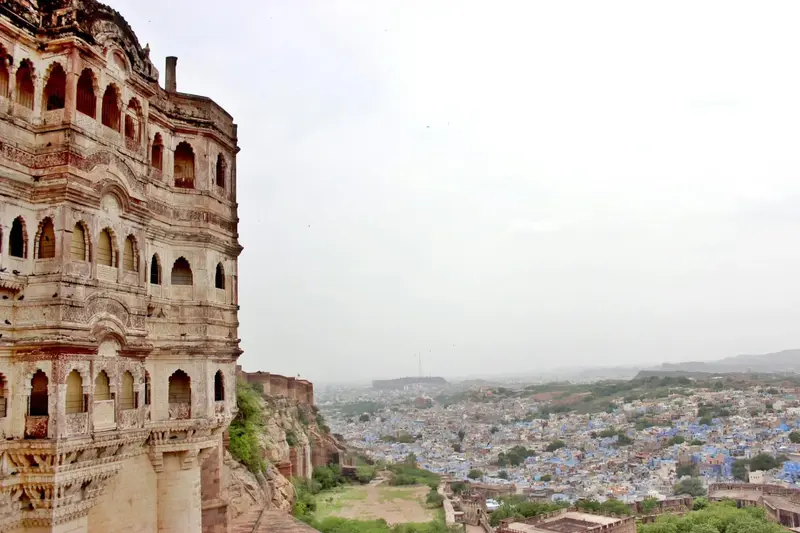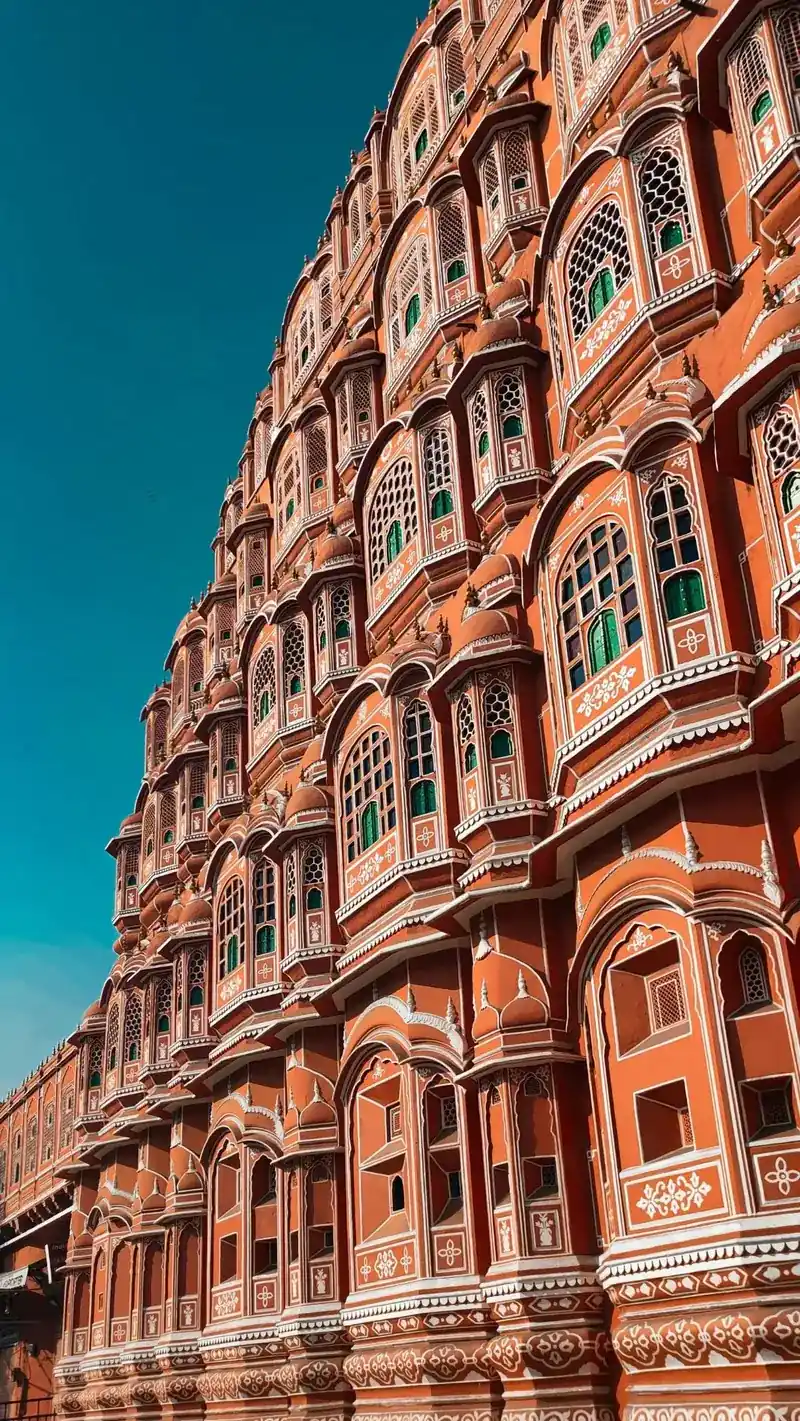
Jaipur was not built to be a capital — it was designed to be a statement. Founded in 1727 by Maharaja Sawai Jai Singh II on a flat plain at the edge of the Aravalli hills, Jaipur is one of the earliest planned cities in Asia — laid out on a grid according to ancient Vastu Shastra principles, with streets aligned to cardinal points and seven gates marking the city's perimeter. The terracotta-pink colour that covers the old city was applied uniformly in 1876 for the visit of Prince Albert of Wales — a decision that stuck and gave the city its most recognisable identity.
Today Jaipur anchors India's Golden Triangle tourist circuit alongside Delhi and Agra, but the city's appeal has always been more layered than the fort-palace-bazaar circuit suggests. The Walled City's streets operate as a living commercial and residential district — perfumers, gem cutters, block printers, and bell foundries occupying the same lanes their families have worked for two or three centuries. The royal architecture is extraordinary, but understanding Jaipur means spending time in the lanes between the palaces, not just the palaces themselves.
4.8 ★ Rated by 4L+ Travellers | Connect With An Expert
Best Time to Visit Jaipur
Winter (October to March) is the undisputed peak season. Temperatures between 8°C and 25°C create the conditions for long days of sightseeing without the energy drain of Rajasthani summer heat. The November-February window carries the heaviest tourist pressure — book hotels and heritage property dining weeks ahead for the December–January period. The Desert Festival at Jaisalmer (February) and Jaipur Literature Festival (January) each draw large international audiences; Jaipur's own accommodations fill for the literature festival's five-day run.
Spring (March to May) brings the Holi celebrations (March) and the Gangaur festival — both of which are among the most photographically rewarding events in Rajasthan. As temperatures rise through April and May, the crowds thin and hotel prices drop. Early morning and late afternoon remain comfortable for sightseeing; midday requires shade and patience.
Monsoon (July to September) greens the Aravalli hills and brings occasional dramatic rainfall across the city. The landscape transformation is real — the fort walls look different, the city smells different, and the reduced tourist numbers make some of the major sites genuinely navigable. Some outdoor activities are curtailed, but the Amer Fort and City Palace are no less impressive under heavy cloud.
How to Reach Jaipur
By Air
Jaipur International Airport, 13 km from the Walled City, serves direct connections from Delhi (45 minutes), Mumbai (1.5 hours), Bangalore, Hyderabad, and several international cities. The airport infrastructure has expanded significantly in recent years. Pre-paid taxis from the airport to the old city quarter take 25 to 40 minutes depending on traffic.
By Rail
Jaipur Junction connects to the capital's rail network with multiple high-speed options. The Shatabdi Express covers the Delhi to Jaipur distance (280 km) in approximately 4.5 hours, making it the most used inter-city service. The Ajmer Shatabdi and Intercity Express serve additional frequency. From Mumbai, the Jaipur Express (17 hours) runs the overnight connection.
By Road
The Delhi to Jaipur distance of 280 km via NH48 takes approximately 5 hours without traffic — the highway is dual-carriageway for most of its length and well-maintained. From Agra (240 km, 4.5 hours) and Udaipur (400 km, 6.5 hours), the Golden Triangle and Rajasthan circuit connections are straightforward. AC Volvo buses from Delhi ISBT Kashmiri Gate run frequent daily services at moderate fares.
Local Cuisine to Try
Rajasthani cuisine was historically designed to survive the desert: ghee-rich preparations, preserved proteins, dried lentils, and the extended shelf life of Bajra and Jowar flatbreads that need no refrigeration. Dal Baati Churma — the trifecta of baked wheat rolls (baati), slow-cooked lentils (dal), and sweetened coarsely ground wheat (churma), all drowning in clarified butter — is the central Rajasthani meal. Ker Sangri (a dish of dried berries and desert beans preserved in oil and spice, native to Rajasthan's Thar Desert ecology) is the most distinctively regional preparation. Laal Maas (fiery goat curry in Mathania red chilli) is the carnivorous highlight. Mawa Kachori, a sweet deep-fried pastry filled with thickened milk, is Jaipur's most distinctive street snack — best from the original location of Rawat Misthan Bhandar on Station Road.
Plan Your Jaipur Journey
Let Himalayan Escalate help you plan a Jaipur itinerary that goes beyond the standard fort circuit — private heritage walks, gem district access, and royal dining experiences that bring the Pink City's layered history to life.
Contact Us Today to start planning!
---
Travel With Himalayan Escalate