Royal Rajasthan Heritage Tour
Why choose best royal rajasthan heritage tour with our Shimla-based experts?
Local Insider Insight
Explore the local morning markets and heritage trails of Rajasthan Circuit before 9:00 AM to experience authentic local life, traditional breakfast stalls, and uninterrupted views before day crowds arrive.
The **Royal Rajasthan Heritage Tour** is a comprehensive 12-day cultural circuit spanning the primary desert and lake entities of the **Rajputana** heartland. This professionally managed expedition facilitates a journey through the **Mewar (Udaipur)** and **Marwar (Jodhpur)** kingdoms, connecting the 'Pink City' hub of **Jaipur** with the 'Golden City' of **Jaisalmer** and the largest fort in India, **Chittorgarh**. Addressing primary travel intent for **Thar Desert** camping, **UNESCO-listed Amber Fort** exploration, and the **Brahma Temple** at Pushkar, the itinerary integrates high-authority logistics such as private SUV transits across the **Aravalli range** and luxury heritage haveli stays. Optimized for the **October to March** season, this tour provides a deep-dive into the living history of the **Maharajas**, ensuring a premium, high-conversion experience for families seeking the ultimate Indian heritage odyssey.
Itinerary Highlights
Amber Fort Pushkar Jaisalmer Desert
Best Time to Visit
Best time to visit is March to October. We tailor the itinerary based on season, road conditions, and your travel style.
Package Cost and Inclusions
Packages usually start from INR 34,999 per person and can be customized by stay type, transport, and inclusions.
"Rajasthan is a tapestry of royal stone and vast sands. In Jaipur, the Amber Fort is a masterpiece of Rajput architecture—visit early to witness the sun illuminating the red sandstone. Udaipur, the city of lakes, is best appreciated from a boat on Lake Pichola at sunset as the Lake Palace glows golden. In Jaisalmer, spending a night at a luxury tent in the Sam sand dunes under a canopy of stars brings the vastness of the desert to life."
Trip Highlights
Amber Fort
Pushkar
Jaisalmer Desert
Chittorgarh Fort
The Pink City Welcomes You
Amber Fort, Sheesh Mahal & the Pink City Bazaars
The Only Brahma Temple on Earth
The Blue City Awaits
Day-by-Day Itinerary
Arrival in Jaipur - The Pink City Welcomes You Varies
Jaipur Airport/Railway Station - Heritage Hotel Your **Royal** 12-day Rajasthan odyssey begins in Jaipur - the Pink City and the gateway to **Royal** Rajputana. As your private vehicle winds through the old walled city, the ochre-pink sandstone buildings, ancient gateways, and marigold-strung bazaars set an immediate and unmistakable tone. Check into a grand heritage hotel - Rambagh Palace (former royal residence of the Jaipur Maharaja, now Taj's flagship heritage property), Samode Haveli (a 200-year-old merchant mansion in the heart of the old city), or Jai Mahal Palace. The very architecture you are sleeping in is centuries old. After settling in and a leisurely lunch, begin your Jaipur explorations with the City Palace complex - the ceremonial hub of the Jaipur royal household, still partially inhabited by the royal family. The museum section houses extraordinary collections: the Mubarak Mahal with its textile collection, the Diwan-i-Khas with the two enormous silver urns (world's largest, used to carry Ganga water for the Maharaja's overseas journeys), and the Chandra Mahal's lower floors. Immediately adjacent is Jantar Mantar - Emperor Jai Singh II's 1724 stone astronomical observatory containing 19 giant precision instruments. The Samrat Yantra (the world's largest sundial, 27 metres high) can tell time to within 2 seconds accuracy. A UNESCO World Heritage Site. Head to Nahargarh Fort (8 km from the city) for Jaipur's finest panoramic sunset view - the entire Pink City stretches below in a vast terracotta grid, the Amber Fort visible on its ridge in the distance, and the Aravalli hills closing the horizon. Return for dinner at Chokhi Dhani - the famous ethnic village resort that recreates authentic Rajasthani folk life with puppet shows, camel rides, music, and a magnificent thali dinner.
Amber Fort, Sheesh Mahal & the Pink City Bazaars Varies
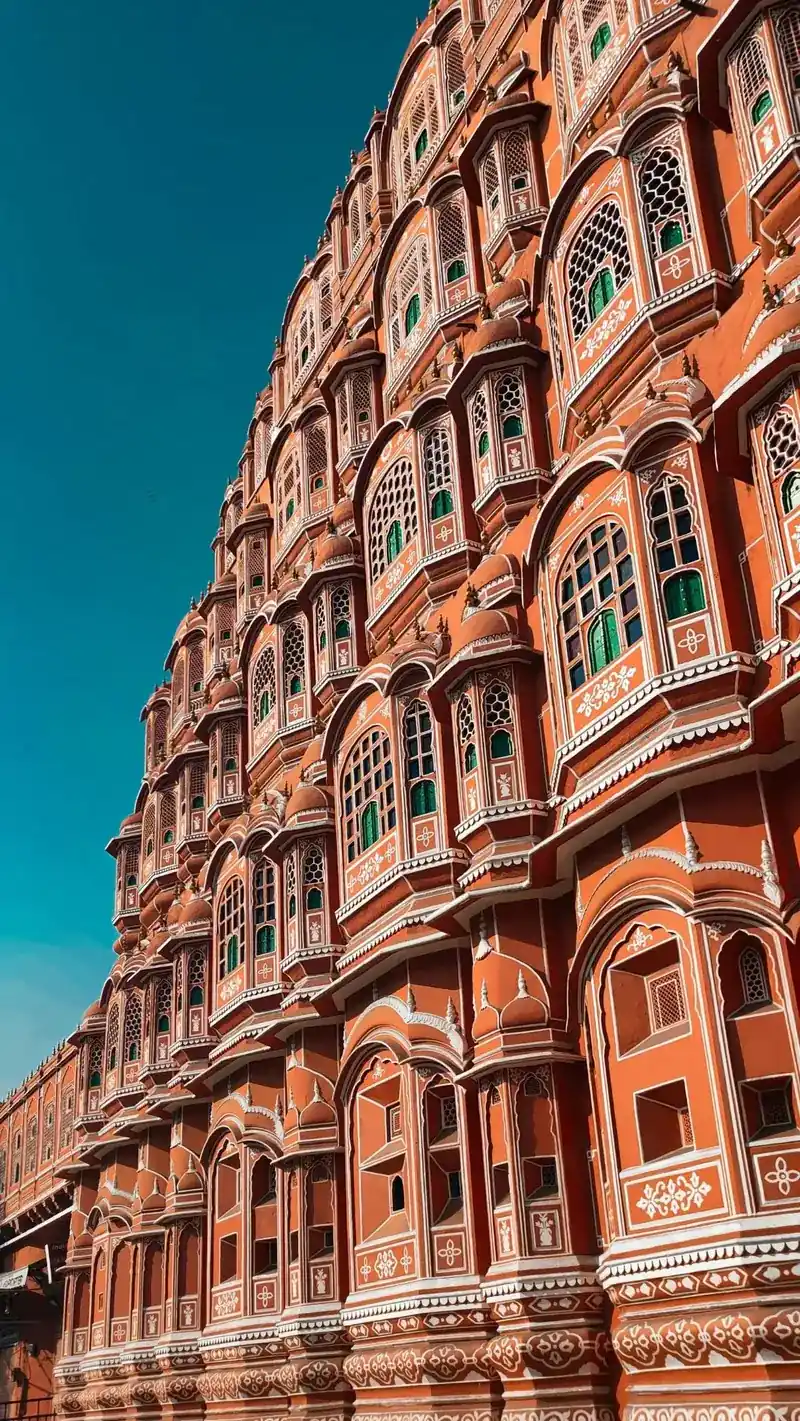
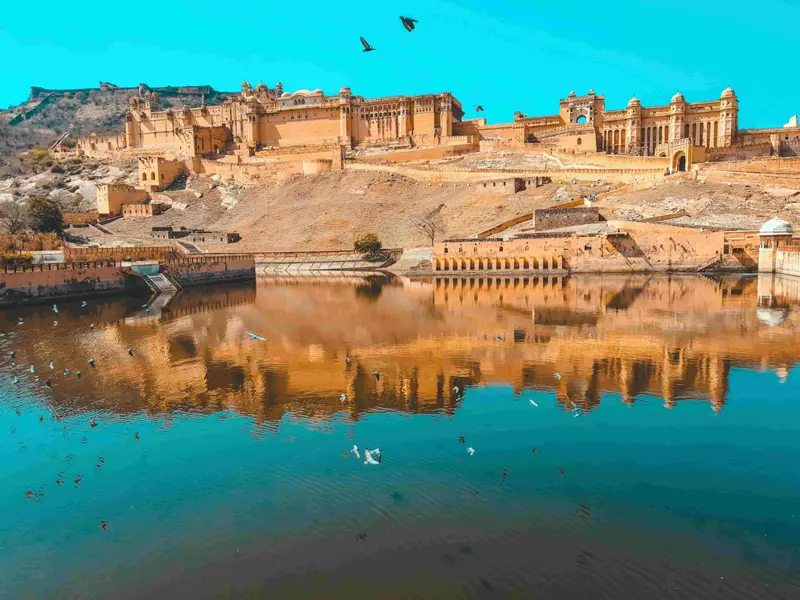
You'll love how amber Fort - Jal Mahal - Hawa Mahal - Johari Bazaar Rise by 7:00 AM for an early assault on the magnificent Amber Fort - one of Rajasthan's crown jewels. The jeep ride up the cobblestone ramp brings you to the massive Suraj Pol and into the spectacular Ganesh Pol - a gatehouse so elaborately painted, gilded, and mirror-inlaid that it is one of the most photographed gateways in India. Inside, the Sheesh Mahal (Mirror Palace) is the highlight: an entire chamber covered in thousands of convex glass mirror chips set in intricate geometric patterns, so that a single candle flame creates the illusion of a sky full of stars. The Jas Mandir with its fine marble lattice screens, the Sukh Niwas (Hall of Pleasure) with its channel of cool water running through the floor, and the zenana apartments with their private gardens all deserve time. The views of the Maota Lake and Jaipur city from the fort walls are exceptional. Consider the optional hot air balloon ride (-8,000-10,000 per person) from near Amber at dawn - an extraordinary aerial view of the fort and old city. Drive back past the serene Jal Mahal (Water Palace) - the mid-lake five-storey palace in Man Sagar Lake that appears to float on the water - for photographs. Lunch at a classic Jaipur restaurant. Then explore the Hawa Mahal - the five-storey pink sandstone lattice facade of 953 windows built to let **Royal** women watch street processions unseen; the interior is small but the views from the upper floors over the old city are excellent. Spend the afternoon in Jaipur's extraordinary bazaars: Johari Bazaar for Rajasthan's world-famous gem trade - diamonds, emeralds, rubies, and sapphires are cut and set in workshops behind the storefronts; Bapu Bazaar for block-print cotton and silk textiles; Tripolia Bazaar for lac bangles; Nehru Bazaar for traditional Rajasthani juttis (leather shoes). A free evening for independent exploration or a fine-dining experience - Suvarna Mahal at Rambagh Palace for an exceptional Rajasthani **Royal** cuisine experience, or 1135 AD at Amber Fort (open evenings) for the unique experience of dining inside the fort complex.
Jaipur to Sacred Pushkar - The Only Brahma Temple on Earth Varies
Jaipur - Pushkar (145 km, ~3 hrs) After breakfast, drive the 145 km southwest to Pushkar - one of the oldest and holiest cities in India, tucked away in a natural bowl in the Aravalli hills around a sacred lake. The town is Hinduism's only city with a temple dedicated to Lord Brahma (the Creator) - a unique religious distinction. Arrive around noon and check into a lakeside dharamshala or boutique hotel. Walk immediately to Pushkar Lake - a perfectly circular sacred lake fed by underground springs and surrounded by 52 ghats (bathing steps), hundreds of small temples, and continuous religious activity. The fragrance of flowers and incense, the sound of bells and chants, and the visual kaleidoscope of orange-clad sadhus, women in brilliant saris, and pilgrims bathing in the sacred water create one of India's most powerful spiritual atmospheres. Visit the Brahma Temple - recognisable by its distinctive red sandstone spire and a silver turtle at the entrance. One of the few temples in the world dedicated to Lord Brahma, and an important pilgrimage site for Hindus. Browse Pushkar's fascinating pedestrian-only Bazaar - the entire old town centre is closed to vehicles. The market sells Rajasthani silver jewellery (some genuinely antique, all beautifully crafted), tie-dye fabrics, camel leather goods, precious stones, and the town's own specialty - Pushkar rose-water products, incense, and essential oils. Lunch at a rooftop caf- overlooking the lake - Funky Monkey Caf-, Raju's Rooftop, or Out of the Blue all have superb lake views and vegetarian menus. Watch the evening aarti at the ghats - the moment when dozens of priests at the main Brahma Ghat simultaneously light oil lamps, ring bells, and send burning lamps floating out onto the lake while pilgrims chant - is genuinely moving. The reflection of the lights in the dark water and the sound of prayers echoing off the ghats is extraordinary. Dinner in Pushkar - the town is strictly vegetarian and alcohol-free, so the menus are all plant-based but excellent.
Pushkar to Jodhpur - The Blue City Awaits Varies
Here's the thing: pushkar - Jodhpur (200 km, ~3.5 hrs) A final Pushkar morning - take a sunrise walk around the lake perimeter for a different experience of the ghats in the early light, before the pilgrims arrive. The lake is remarkably quiet and reflective at this hour. After breakfast, check out and begin the 200 km drive northwest to Jodhpur - the Blue City. The drive passes through typical Rajasthani landscape: the rocky Aravalli terrain giving way to increasingly arid scrubland as you approach Jodhpur's surroundings. The road passes several ancient step wells, small Shiva temples, and the occasional camel cart that makes this route quintessentially Rajasthani. Arrive in Jodhpur by midday. Check into a heritage property - RAAS Jodhpur (an award-winning boutique hotel built from red sandstone with stunning fort views), Vivanta Jodhpur, or Indana Palace are all excellent. The views of Mehrangarh Fort rising sheer from its cliff perch are jaw-dropping from the moment you arrive - the scale and drama of this fortress above the rooftops of the old blue city is unlike anything else in India. Freshen up and take a first exploratory walk through the lanes of the Old City below the fort - narrow streets where houses are painted in every shade of indigo and sky-blue. The blue colour was historically associated with Brahmin households, but gradually spread throughout the old city. Watch the sunset from a rooftop caf- overlooking Mehrangarh - as the fort's massive walls turn from grey-gold to deep amber in the last light and the blue houses of the old city catch the colour below, the effect is genuinely spectacular. Dinner at Indique - Jodhpur's finest rooftop restaurant, with an unobstructed fort view and exceptional Rajasthani cuisine including the legendary laal maas (fiery red mutton curry) and safed maas (creamy white mutton in almond sauce).
Mehrangarh Fort - Rajasthan's Finest Fortress Varies
Mehrangarh Fort - Jaswant Thada - Umaid Bhawan - Rao Jodha Park An entire morning dedicated to Mehrangarh Fort - and it needs every minute. Arrive at 8:30 AM before the coach tours begin. The fort was founded in 1459 by Rao Jodha (founder of Jodhpur) on a rocky outcrop above the city. Its massive outer walls - up to 36 metres high and 21 metres wide - rise sheer from the natural rock of the cliff in an almost smooth organic continuation. The audio guide (narrated by the late Peter Ustinov, -200) is among the best heritage audio tours in India. Inside: the Loha Pol (Iron Gate) with its 15 handprints of **Royal** widows pressed in vermillion before they mounted the funeral pyre; the Moti Mahal (Pearl Palace) with its five concealed alcoves behind lattice screens where queens observed court unseen; the Phool Mahal (Flower Palace) with its breathtaking gold-leaf ceiling; the Sheesh Mahal. The museum has extraordinary collections of **Royal** palanquins, elephant howdahs, Mughal armour, miniature paintings, and a priceless collection of royal cradles. Entry: -600 (foreigners) / -100 (Indians). Descend to Jaswant Thada - a beautiful white marble cenotaph memorial built in 1899 to Maharaja Jaswant Singh II. The pale marble is translucent, creating a warm glow in the afternoon light; the small complex has royal portrait gallery and lovely terraced gardens with fort views. Lunch at a nearby heritage restaurant. Then visit the Umaid Bhawan Palace - one of the world's last great palaces, built between 1929-1943 during a severe drought as an employment relief project (3,000 workers for 15 years). Part Taj Hotel, part royal residence, the accessible museum section (-100 entry) houses extraordinary collections of Art Deco clocks, crystal, silver ceremonial objects, and an impressive vintage car collection including a 1935 Rolls Royce Phantom. Rao Jodha Desert Rock Park - a 70-acre conservation area at the base of Mehrangarh's cliff, where desert-adapted native plants have been restored - makes for a peaceful 45-minute late afternoon walk as the fort glows above. The views of Mehrangarh from within the park at sunset are some of the best in Jodhpur. Finish the evening in the Old City's blue lanes - wandering at 6 PM when the light is purple and the alleyways are lit by shop signs and cooking fires.
Into the Thar - Jodhpur to Jaisalmer Varies
Jodhpur - Jaisalmer (285 km, ~5 hrs) After breakfast, check out and begin the extraordinary 285 km drive west into the Thar Desert. This is one of India's great road journeys - the transformation of the landscape from rocky Aravalli foothills into pure desert happens gradually and then completely. Thorn trees thin out, the red rock gives way to sandy soil, and by the time you are an hour beyond Pokharan, the landscape is absolute desert in every direction. Dry riverbeds, sand dunes visible on the road's edge, desert larks on the telegraph wires, and the occasional camel caravan make this a genuinely cinematic drive. Stop at a roadside tapri for desert chai. Arrive in Jaisalmer around 1:30-2:00 PM. The fort materialises on the flat desert horizon long before you reach the city - its golden sandstone ramparts rising like a mirage from the sand. Check into a heritage haveli - Suryagarh (a remarkable palace hotel outside the city), Killa Bhawan (inside the fort walls), or Fort Rajwada. After checking in, walk to Gadisar Lake - a 14th-century **Royal** reservoir ringed with beautifully carved cenotaphs, temples, and ornamental gateways. The yellow sandstone reflections in the still water, the sound of pigeons and temple bells, and the view of the fort above make this a deeply peaceful introduction to the Golden City. Explore the bazaars at the base of the fort as the sun descends - the market lanes sell extraordinary mirror-embroidered textiles, camel leather goods, silver Rajasthani jewellery, carved sandstone pieces, and printed fabrics. Watch the fort from below as the yellow sandstone turns from pale gold to burnt amber to orange in the last light. Dinner at a rooftop restaurant beneath the illuminated fort - Trio Restaurant or Saffron at Nachana Haveli are superb, with stunning fort views over dinner.
The Golden Fort, Jain Temples & Merchant Havelis Varies
Let's be honest, jaisalmer Fort - Jain Temples - Patwon Ki Haveli - Bada Bagh Jaisalmer Fort - the Sonar Qila (Golden Fortress) - is one of the world's great medieval citadels and one of very few living forts anywhere, with approximately 4,000 people still living within its walls. Climb through the four successive gateway arches - Akhai Pol, Ganesh Pol, Rang Pol, and Hawa Pol - each more impressive than the last, to the inner city's extraordinary labyrinth of lanes, carved doorways, tiny temples, and golden sandstone houses so ancient and so beautiful that walking through them feels like time travel. The Raj Mahal (**Royal** Palace, entry -30) gives a good overview of the fort's history and houses **Royal** artefacts. The seven Jain Temples within the fort - built between the 12th and 15th centuries - contain some of the finest stone carving in the world: entire ceilings of interlocking geometric marble lace, columns of dancing apsaras so finely detailed that individual feathers and jewellery are carved, and a complexity of religious iconography across 3,000 square metres that takes hours to fully appreciate. Descend from the fort to visit the extraordinary merchant havelis that form Jaisalmer's second great architectural treasure: Patwon Ki Haveli - a complex of five connected mansions built by five brothers of the Patwa trading clan between 1800-1860. The facade is perhaps the most intricate carved sandstone exterior anywhere in India - every inch of the five-storey front is covered in carved alcoves, elephants, figures, floral designs, and geometric patterns. Salim Singh Ki Haveli, with its unique peacock-shaped overhanging upper levels, and Nathmal Ki Haveli, carved by two brothers with slightly different interpretations on each side, are equally remarkable. In the afternoon, drive 6 km north to Bada Bagh - the royal cenotaph garden of the Bhati rulers, a poignant complex of domed chhatri pavilions stretching up a hillside, each with carved equestrian portraits of successive Jaisalmer rulers in their ceilings. Sunset from Bada Bagh - the golden sandstone cenotaphs catch the last light magnificently. Return to town for a final Jaisalmer evening in the bazaars. Dinner at 8 July Restaurant near the fort - simple, authentic, and popular with discerning travellers.
Sam Sand Dunes - Desert Camp, Camel Safari & Stargazing Varies
Jaisalmer - Sam Sand Dunes (45 km) - Luxury Desert Camp A final relaxed Jaisalmer morning - browse a favourite haveli shop, visit the Desert Culture Centre and Museum (-50, excellent introduction to Thar desert ecology and folk culture), or simply sit at a rooftop caf- with a last cup of Jaisalmer chai watching the fort in the morning light. Look for Jaisalmer's speciality shopping: hand-block printed fabric by the metre (among the finest in Rajasthan), traditional wooden toys, fine camel-bone miniature paintings, and silver tribal jewellery. Depart by 2:30 PM for the 45 km drive to Sam Sand Dunes. The road goes absolutely straight into the desert - no turns, no traffic, just the highway vanishing into the horizon. At Sam, the dunes are massive, pure, and overwhelming - no shrub, no tree, no landmark for miles. Check into your luxury tented camp (Suryagarh Desert Retreat, The Serai, or Desert Tulip are superb options) with proper beds, attached bathrooms, and electricity in traditional-styled tent suites. By 4:00 PM, board a camel and ride deeper into the dune system for the sunset. The cameleer takes you beyond the tourist crowd to find the perfect spot on a high dune crest. The Sam sunset is staggering - the sun descends directly into the desert horizon, the dunes casting long blue shadows across the sand, and the entire landscape glowing copper and crimson. Return to camp after dark for the cultural programme: Kalbeliya snake-charmer dance, Ghoomar, and Manganiyar folk music performed around a bonfire by performers in brilliantly embroidered costumes. The thali dinner under the open sky. After dinner, turn off all camp lights - the Milky Way appears overhead with absolute clarity, the entire galaxy visible to the naked eye from horizon to horizon. One of India's finest stargazing experiences.
Desert Sunrise to Bikaner - Camels, Forts & Rats Varies
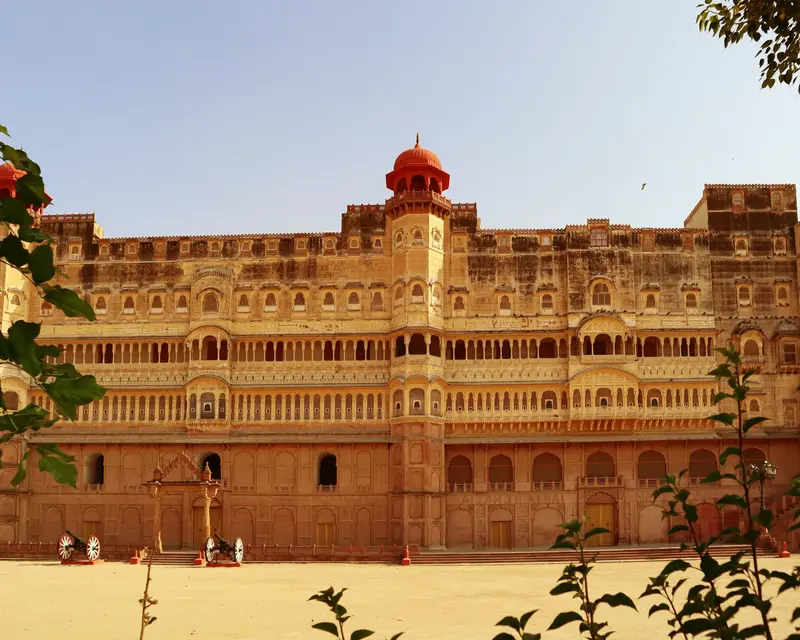
Sam Sand Dunes - Bikaner (330 km, ~5.5 hrs) Rise before dawn. Walk to the nearest high dune crest by 5:30 AM for the desert sunrise - the darkness of the Thar is absolute, then the eastern sky pales, blushes, and suddenly the sun appears and the dunes light up in long golden shadows. After breakfast at camp, check out and begin the long 330 km drive northeast to Bikaner. The route passes through the heart of the Thar - ancient camel-trading routes, small desert towns with remarkable step wells, and the occasional village where painted houses and dressed camels give a glimpse of desert life. Optional detour to Kheechan village (20 km off route) between November and March - the village attracts 10,000-12,000 demoiselle cranes (from Central Asia) who have been fed by the villagers for generations and land in the fields in spectacular formations at dawn and dusk. Arrive in Bikaner by early afternoon. The city has a distinct personality - less touristy than Jaisalmer or Jodhpur, more authentic and workmanlike, with an extraordinary fort at its heart. Junagarh Fort was built in 1588 by Raja Rai Singh and - uniquely for Rajasthan - was never conquered. The fort museum is outstanding: 37 palaces and temples within the compound, featuring the Anup Mahal (splendid red lacquer and gold hall), the Badal Mahal (Cloud Palace, painted with rain clouds and lightning), the Phool Mahal with a breathtaking painted ceiling of intertwined flowers, and a remarkable collection of **Royal** artefacts including World War I biplanes (used by the Bikaner state forces). Entry: -500 (foreigners) / -50 (Indians). Drive 30 km south to Deshnoke for the extraordinary Karni Mata Temple - the famous 'Rat Temple'. The temple is sacred to Karni Mata, a 14th-century mystic warrior saint. Within the temple complex live approximately 25,000 rats (kabas) considered sacred and fed by the temple - the legend states they are the reincarnated ancestors of Karni Mata's family awaiting rebirth as humans. Entering the temple barefoot, watching the rats swarm around the food offerings and run freely over your feet, is a uniquely surreal and strangely wonderful experience. Dinner back in Bikaner - try the famous Bikaneri bhujia (crispy lentil snacks invented here), Bikaneri samosa (distinctively spiced), and the local specialty kachori.
Bikaner to Udaipur via Chittorgarh - Epic History on the Road Varies
Bikaner - Chittorgarh (450 km, ~7 hrs) - Udaipur (115 km, ~2 hrs) A long but richly rewarding travel day - beginning the journey south out of the desert and back toward the greener Aravalli country. The 450 km drive from Bikaner to Chittorgarh takes approximately 7 hours with stops - the landscape transitions from flat desert to increasingly agricultural plains, ancient market towns, and the distant Aravalli ridge on the western horizon. Pack a good picnic from the hotel's kitchen and enjoy the Rajasthan countryside as the kilometres unfold. Arrive at the base of Chittorgarh by mid-afternoon. - spread across a 7 km long, 1 km wide sandstone mesa rising 180 metres from the surrounding plains - is the largest fort in India by area and one of the most historically poignant sites on the subcontinent. Three times in its history, the fort's Rajput defenders chose collective self-immolation (jauhar) over surrender - the most famous being the 1303 jauhar of Rani Padmini with 16,000 women of the **Royal** household when Alauddin Khilji's forces breached the walls. The fort contains within its walls three Jauhar Kunds (immolation pits), seven major temples, four palaces, two victory towers (the Vijay Stambha - a spectacular 37-metre tower built in 1448 - and the Kirti Stambha), dozens of smaller temples, and ancient water reservoirs. The scale of history here is epic; hire a local guide (-500-700) who will make this visit profoundly moving. After Chittorgarh, the final 115 km drive to Udaipur in the evening arrives as darkness falls over the city of lakes - your first glimpse of the illuminated City Palace reflected in Lake Pichola makes the long travel day entirely worthwhile. Check into a lake-facing heritage hotel. Light dinner and rest.
Udaipur - City Palace, Lake Pichola & Dharohar Varies
City Palace - Jagdish Temple - Lake Pichola Cruise - Bagore Ki Haveli A beautiful full day in one of the world's most romantic cities. Begin with an early morning walk along the Lake Pichola ghats - the mist on the water, the sound of temple bells, and the City Palace glowing in the first light make this an extraordinary experience. Enter the City Palace complex (entry -300) - the largest palace in Rajasthan, built over 400 years. The Mor Chowk (Peacock Courtyard) with its brilliant mosaic peacocks, the crystal gallery (-500 extra), the Zenana Mahal with its Mewar miniature paintings, and the upper terraces overlooking the lake are all exceptional. Visit Jagdish Temple - a magnificent 17th-century stone temple with ornate carved exterior and a giant brass Garuda at the gate. After a lakeside lunch (Ambrai Restaurant for the famous lake-and-palace views, or Raas Leela for rooftop Rajasthani cuisine), take a private boat ride on Lake Pichola - the 360- view of the City Palace, Jag Niwas (Taj Lake Palace), and Jag Mandir island palaces as you glide across the water in the afternoon light is the quintessential Udaipur experience. Visit Saheliyon Ki Bari (Garden of the Maidens) - an 18th-century formal garden with lotus pools, marble fountains, and beautiful kiosks. Then Shilpgram (3 km from city) - a rural crafts village where artisans from five western states demonstrate and sell traditional crafts. By 7:00 PM, arrive at Bagore Ki Haveli for the 'Dharohar' folk dance performance - one of the finest cultural shows in Rajasthan, held in the beautiful lakefront courtyard of an 18th-century haveli. Ghoomar, Bhil tribal dance, fire dance with pots balanced on the head, and Rajasthani classical dance are all performed. Farewell dinner at Upr- by 1559 - a romantic rooftop restaurant above Lal Ghat overlooking the lake.
Departure - Farewell to Royal Rajasthan Varies
Udaipur - Maharana Pratap Airport A final lingering breakfast with the lake view - the Aravalli hills, the white marble palaces, the shimmering lake surface. This morning belongs to you: a final stroll through the old city's lanes, a last cup of Rajasthani masala chai at a ghat-side caf-, or some last-minute shopping. Udaipur's markets near the City Palace offer exceptional handicrafts: Rajasthani miniature paintings, blue pottery, silver jewellery, bandhani fabrics, and sandalwood products are all genuine and high quality. Transfer to Maharana Pratap Airport, 22 km from the city centre. Allow 1 hour from the old city. Your 12-day **Royal** odyssey through Rajasthan's grandest cities, forts, lakes, deserts, and temples is complete. From the astronomical wonders of Jaipur to the golden sandstone of Jaisalmer, from the camel-dotted Thar to the blue city of Jodhpur, from the tragic grandeur of Chittorgarh to the romantic lakes of Udaipur - you have experienced the full spectrum of Rajputana magnificence. Onward journey home.
Initializing interactive map...
Key Attractions
Amber Fort
Experience the breathtaking beauty of Amber Fort in Rajasthan Circuit. This iconic attraction offers visitors a deep dive into the local culture, stunning natural landscapes, and unforgettable memories.
Pushkar
Experience the breathtaking beauty of Pushkar in Rajasthan Circuit. This iconic attraction offers visitors a deep dive into the local culture, stunning natural landscapes, and unforgettable memories.
Jaisalmer Desert
Experience the breathtaking beauty of Jaisalmer Desert in Rajasthan Circuit. This iconic attraction offers visitors a deep dive into the local culture, stunning natural landscapes, and unforgettable memories.
Chittorgarh Fort
Experience the breathtaking beauty of Chittorgarh Fort in Rajasthan Circuit. This iconic attraction offers visitors a deep dive into the local culture, stunning natural landscapes, and unforgettable memories.
Inclusions & Exclusions
What's Included
- 11 nights accommodation
- Daily breakfast & dinner
- Private AC vehicle
- Desert camp experience
- Lake Pichola boat ride
What's Excluded
- Airfare
- Entry fees
- Lunch
- Personal expenses
Month-by-Month Seasonality & Weather Matrix
Understand the weather dynamics, road status, and packing recommendations before you finalize your travel dates.
Spring & Summer
April to June · 12°C to 25°C
Ideal for families, honeymooners, and first-time visitors. All mountain passes and sightseeing spots are fully accessible.
Light cottons for daytime; light jacket or sweater for evenings.
Monsoon Magic
July to August · 16°C to 22°C
Lush green valleys, roaring waterfalls, and fresh apple harvests. (Note: Trans-Himalayan Spiti stays in a dry rain-shadow zone with minimal rain).
Waterproof jackets, sturdy grip shoes, and umbrella.
Golden Autumn
September to November · 5°C to 18°C
Crisp mountain air, crystal clear skies with panoramic snow-peak visibility. Premier season for photographers and road trippers.
Mid-weight woolens, windbreaker, and thermal inners for high altitudes.
Snow & Winter Wonderland
December to March · -5°C to 12°C
Fresh snowfall across Shimla, Kufri, Solang, and Atal Tunnel south portal. High-altitude passes (Kunzum/Rohtang top) remain closed.
Heavy down jackets, thermals, fleece gloves, woolen caps, and snow boots.
Dedicated Private Vehicles & Transit Fleet
Every booking includes a 100% private, sanitized mountain-grade vehicle with a seasoned local hill driver. Zero shared cabs, zero surprise fuel surcharges.
Dedicated AC Sedan (Dzire / Etios)
Couples & Small Groups (1-4 Guests)
Premium MPV (Innova Crysta / Ertiga)
Families & Groups (4-6 Guests)
Toyota Fortuner / Luxury SUV
Luxury SUV (2-6 Guests)
Our Zero-Surprise Guarantee: All inter-state commercial taxes, green entry cess, state road permits, driver night allowances, and highway tolls are 100% pre-paid.
2026 Ground Logistics & Updates
Real-time transit intelligence and booking protocols you need to know before traveling.
What is the best time of year to explore Rajasthan Circuit?
What transportation is provided for interstate Rajasthan travel?
Are monument entry tickets and desert activities included?
What authentic regional cuisine is recommended during the trip?
Frequently Asked Questions
Estimated Package Pricing
Budget Plan
Comfortable 3-star stays & shared transfers.
Standard Plan
Premium 4-star hotels & private AC sedan.
Luxury Plan
Handpicked 5-star resorts & luxury SUV.
Note: Final pricing depends on your travel dates, group size, and specific hotel choices. Every itinerary is 100% customizable to fit your exact budget.
The Royal Rajasthan Heritage Tour Notebook
Firsthand stories and operational guides from our experts.
Solo Travel in Rajasthan: The Ultimate 2026 Safety & Route Guide
Rajasthan is one of the most rewarding states for solo travelers in 2026—but it requires a specific blueprint for safety and navigation. Here is how to conquer the Land of Kings alone.
Read Full Story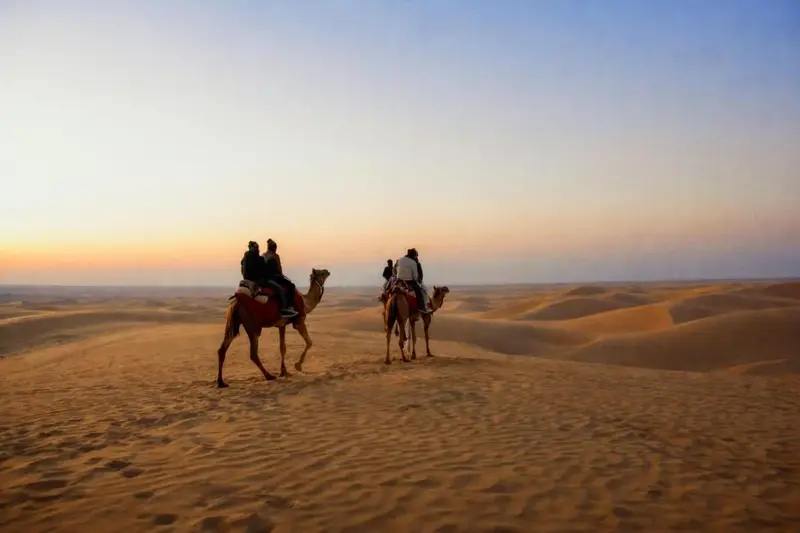
Rajasthan Through New Eyes: A Solo Journey
I did not expect the warmth of a family in Jaisalmer inviting me in for chai, or the absolute silence inside the Jaswant Thada. Here is Aditya Menon’s solo story from the Thar Desert.
Read Full StoryPopular Departures for Rajasthan Circuit
Planning your journey from a major hub? Explore curated logistics, flight-synchronized pickups, and regional special offers for Rajasthan Circuit from these cities:
Related Destinations
10-Day Imperial India - 10 Days Golden Triangle & Royal Rajasthan Grand Tour
8-Day Rajasthan Royal Triangle - 8 Days Jaipur, Jodhpur & Udaipur Grand Heritage Tour
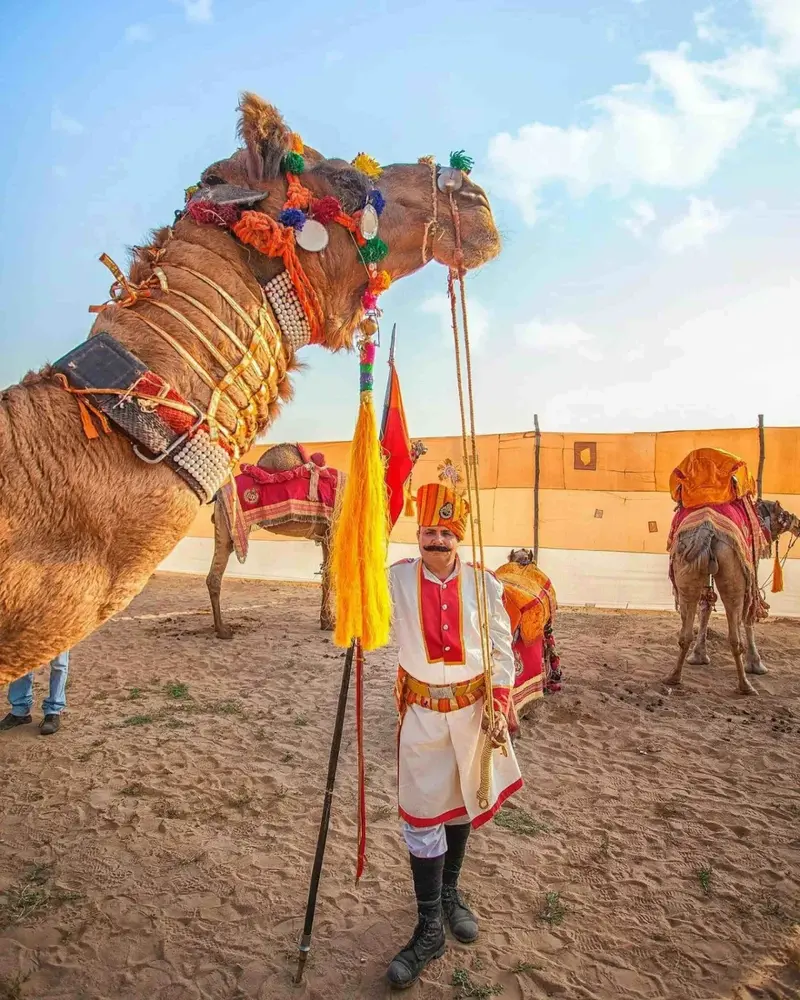
4-Day Jaisalmer Desert Safari Tour
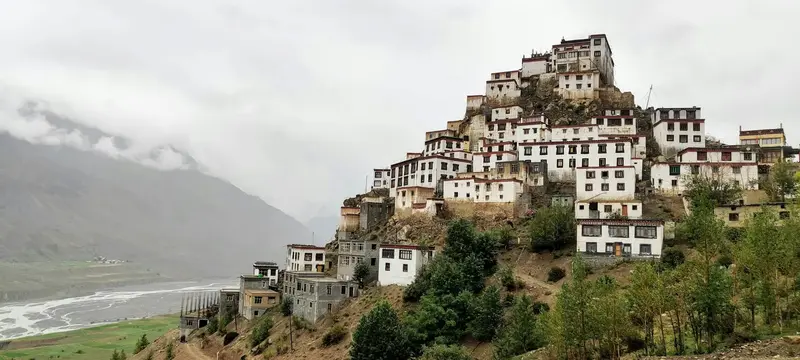
6-Day High Villages: Hikkim, Komic & Langza Expedition
Related Travel Guides
Other Popular Regions
Starting Price
12D/11N
Share your preferences and get a free, customized itinerary from our local Shimla experts.
As boutique planners, we only take 15 trips a month.
Verified Agency
Shimla Head Office
"Absolutely flawless planning! Zero stress from start to finish."
Starting Price
₹34,999